Why in News?
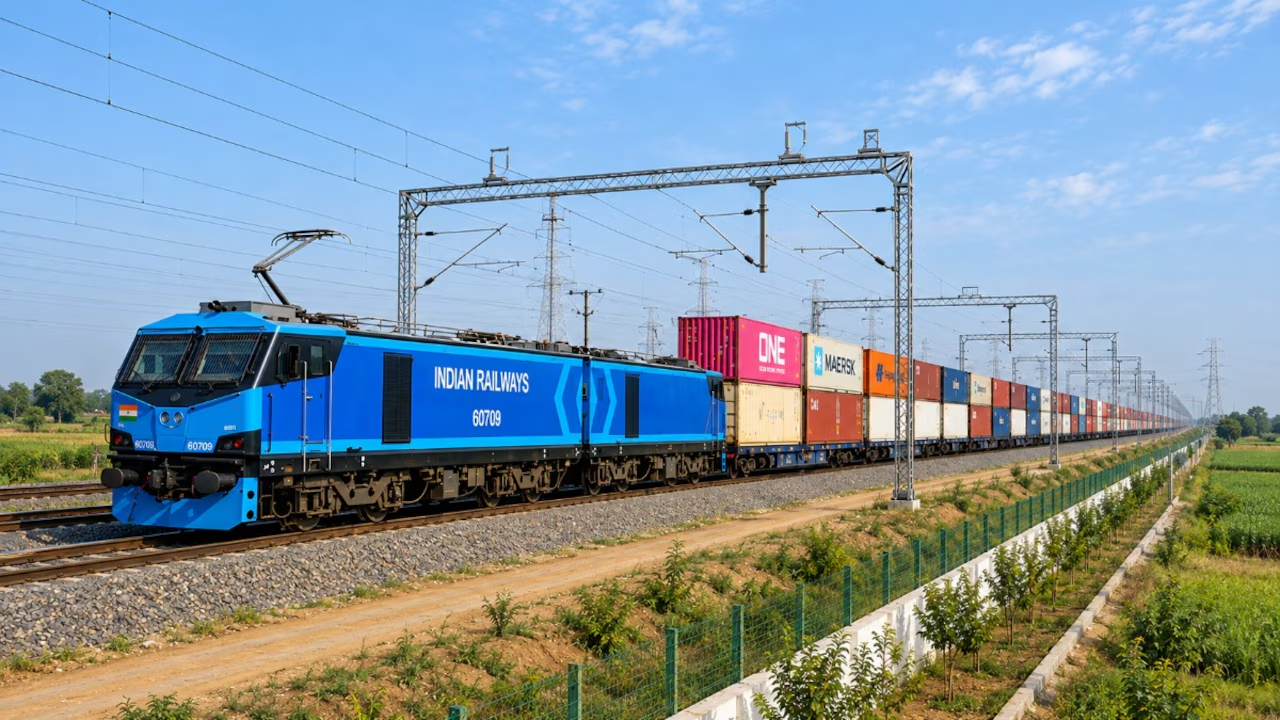
Prime Minister Narendra Modi commissioned the last three line sections of the Western Dedicated Freight Corridor (WDFC) on 9 September 2026. The three line sections cover a distance of 326 km and were constructed at a cost of around ₹20,700 crore. With the commissioning of the last three line sections, the entire 2,843-km Dedicated Freight Corridor (DFC) has started operations.
Key Highlights
The Western DFC connects New Dadri in Uttar Pradesh to New JNPT in Maharashtra. The three line sections that have been commissioned are:
- New Saphale–New JNPT
- New Umbergaon–New Saphale
- New Sanand (North)–New Makarpura
The three line sections cover a distance of 326 km.
The DFC network now consists of:
- Western DFC – 1,506 km
- Eastern DFC – 1,337 km
- Total – 2,843 km
At present, about 443 freight trains are being operated daily on the dedicated freight corridor network.
What is Dedicated Freight Corridor?
- A Dedicated Freight Corridor (DFC) refers to a rail network that caters exclusively to freight and freight traffic.
- Prior to the introduction of the DFC, freight and passenger trains used to share the same tracks. This not only caused delays in the movement of goods but also posed several operational challenges.
- The DFC segregates these two types of traffic, enabling faster and more efficient transportation of goods.
Benefits of Dedicated Freight Corridors
- Reduce the time taken for the transportation of goods.
- Reduce fuel consumption and thus cut costs.
- Decongest conventional rail routes and roads.
- Facilitate the transportation of agricultural goods, perishables, fruits, vegetables, flowers, etc.
- Enable faster movement of double-stack container trains.
- Replace road transport with rail to cut down greenhouse gas emissions.
- Connect production centres, markets and ports efficiently.