
Why in News?
According to a recent analysis by Geopix, an environmental and wildlife campaign organisation, wildfires in Kalimantan, Indonesian Borneo have been threatening roughly 60% of the habitat of Bornean orangutans. The analysis tracked the spread of wildfires in the region affecting the endangered apes from 1 June to 28 August 2026.
Key Findings
- Geopix detected 17,865 wildfire hotspots within the habitats of Bornean orangutans during the study period.
- 22,744 hotspots were detected across Kalimantan.
- Out of these, 78.5% fell within the territory of Bornean orangutans.
- Of the 42.8 million hectares recorded as affected by wildfires, 25.8 million hectares (60.2%) were within the habitats of the endangered apes.
- The analysis suggests that fires spread at an increasing rate in August 2026 compared to June and July.
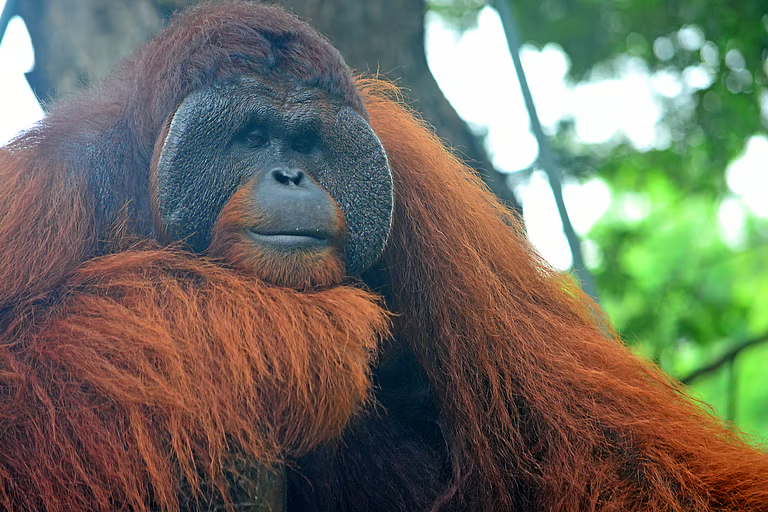
Bornean Orangutan
- Scientific name: Pongo pygmaeus
- IUCN status: Critically Endangered
- Estimated population: Around 57,350 individuals
The species has three subspecies:
- Pongo pygmaeus pygmaeus
- Pongo pygmaeus wurmbii
- Pongo pygmaeus morio
Conservation groups estimate that nearly 80% of the Bornean orangutan population has been lost in less than five decades due to habitat destruction and other human activities.
Why Are the Fires a Major Threat?
The fires pose a threat not only to the habitat of the apes but also to their food resources. The fires may have a major impact on:
- The food resources of the apes
- Nesting trees
- Forest corridors linking fragments of forest
- Genetic diversity
- Reproduction rates
- Future viability of isolated subpopulations of the endangered apes
Geopix blamed the climate crisis as well as an extreme El Niño, which is expected to last until early 2027.
Conservation Hotspots
- According to Geopix's assessment of vulnerability across the range, regions with smaller populations of the apes but high fire threats include Muller-Schwaner, Western Schwaner and Seruyan-Sampit. Conservation groups need to pay more attention to these areas.
- Populations in Rungan River, Katingan and Gunung Palung are also significant for the survival of the apes. These areas need stronger fire prevention and protection measures.
Way Forward
- There is a need to carry out a comprehensive survey of populations and their habitats.
- The impact on food supplies, nesting spots and forest corridors should be assessed.
- The study should be followed by another PHVA (Population and Habitat Viability Assessment) of the ape population.
- An Emergency Action Plan should be launched to address the conservation needs of the apes.
- There should be enhanced fire prevention and law enforcement.
- Forest and wildlife protection and restoration should be strengthened for the remaining wild populations.
- Rescue operations and monitoring of vulnerable populations should also be carried out.