
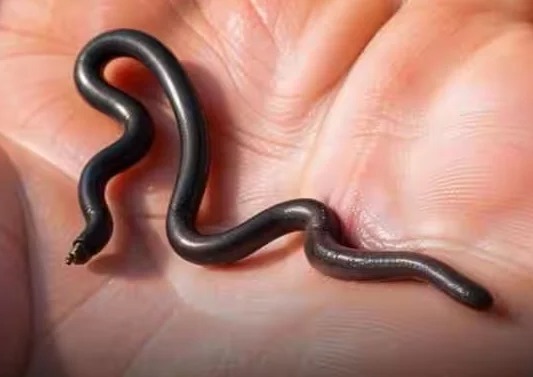
Barbados Threadsnake: Recent Rediscovery and Scientific Importance
Rediscovery:
- The Barbados threadsnake, the smallest known snake species on Earth, has been rediscovered in the wild after being unobserved for decades.
- This rare and elusive reptile had not been seen for years and was feared extinct. Its reappearance marks a significant moment for conservation biology and species recovery in the Caribbean.
- About the Barbados Threadsnake
Scientific Classification:
- Family: Leptotyphlopidae
- Status: Critically Endangered (IUCN Red List)
Habitat and Distribution:
- The species is endemic to Barbados, a Caribbean island.
- Its habitat is limited to tropical dry forests, mainly in the eastern parts of the island.
- These snakes are fossorial, meaning they live and burrow underground, typically in forested or rocky environments.
Physical Characteristics:
- Maximum adult length: 10.4 centimeters (4.1 inches)
- Average adult weight: 0.6 grams (0.02 ounces)
- Known as the smallest snake in the world
- The body is thin and thread-like in appearance
- It is completely blind, relying on other senses to navigate and hunt underground
Behavioral Traits:
- Solitary and fossorial in nature
- Nocturnal, active mainly at night
- During the daytime, it hides under rocks or in the soil
- Often found near ant and termite nests, which serve as both habitat and food source
Diet and Adaptations:
- Barbados threadsnakes are carnivorous, feeding mainly on the larvae of termites and ants.
- They produce pheromones that prevent attacks from termites, allowing them to safely enter termite colonies for feeding.
- Their feeding and nesting habits are highly specialized and play an important role in controlling insect populations in their ecosystem.
Reproduction:
- These snakes are oviparous, meaning they reproduce by laying eggs.
- Unlike many reptiles, the female lays only one slender egg at a time, a trait unique to their evolutionary adaptations.
Conservation Status and Threats:
- The Barbados threadsnake is listed as Critically Endangered on the IUCN Red List.
- The primary threat to its survival is habitat loss due to deforestation, urbanization, and land-use changes in Barbados.
- Its small range and highly specific habitat requirements make it particularly vulnerable to environmental changes.
Conclusion:
- The rediscovery of the Barbados threadsnake is an encouraging sign for conservation efforts.
- However, urgent action is needed to protect its remaining habitat to ensure the survival of this rare and remarkable species.
- Its tiny size, secretive nature, and ecological importance make it a vital component of Barbados’s natural heritage.