
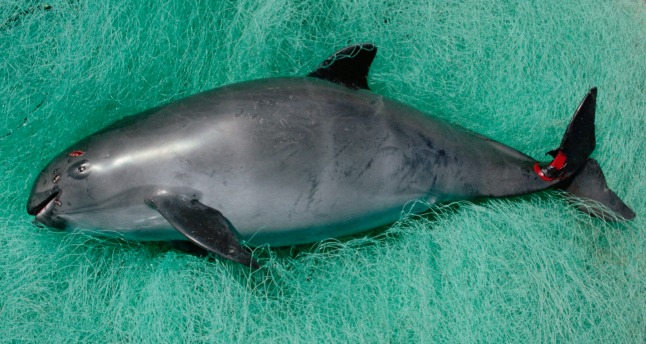
- The North American Environmental Commission has issued a strong report criticizing Mexico for its failure to safeguard the critically endangered vaquita porpoise, with estimates suggesting that only about 10 individuals remain in the wild.
- This raises alarms about the imminent risk of extinction of the world’s most endangered marine mammal.
About Vaquita
- The vaquita (Phocoena sinus) is the smallest member of the porpoise family and also the most endangered cetacean species.
- Shy and elusive, vaquitas have stocky bodies, rounded heads without snouts, and uniquely tall dorsal fins.
- They use echolocation-high-frequency clicks—to navigate and communicate.
Habitat and Distribution:
- Vaquitas are found only in the northern part of the Gulf of California, Mexico, giving them the smallest range of any whale, dolphin, or porpoise.
- They typically inhabit shallow waters up to 50 metres deep, a region rich in fish and shrimp.
Threats:
- The vaquita’s population decline is primarily linked to bycatch in illegal gillnets, especially those set for the totoaba fish, whose swim bladder is highly valued in illegal wildlife trade.
- Despite international bans, gillnet fishing continues, placing the few surviving vaquitas at extreme risk.
Conservation Status:
- The International Union for Conservation of Nature (IUCN) lists the vaquita as Critically Endangered.
- Conservationists have repeatedly warned that without urgent, enforceable measures—including a permanent ban on gillnets—the species could vanish within years.
Significance:
- The fate of the vaquita highlights the broader challenges of marine conservation, where illegal trade, weak enforcement, and local livelihoods collide.
- Its extinction would mark the first loss of a marine mammal species in the 21st century, a stark reminder of human impact on biodiversity.