
Why in News?
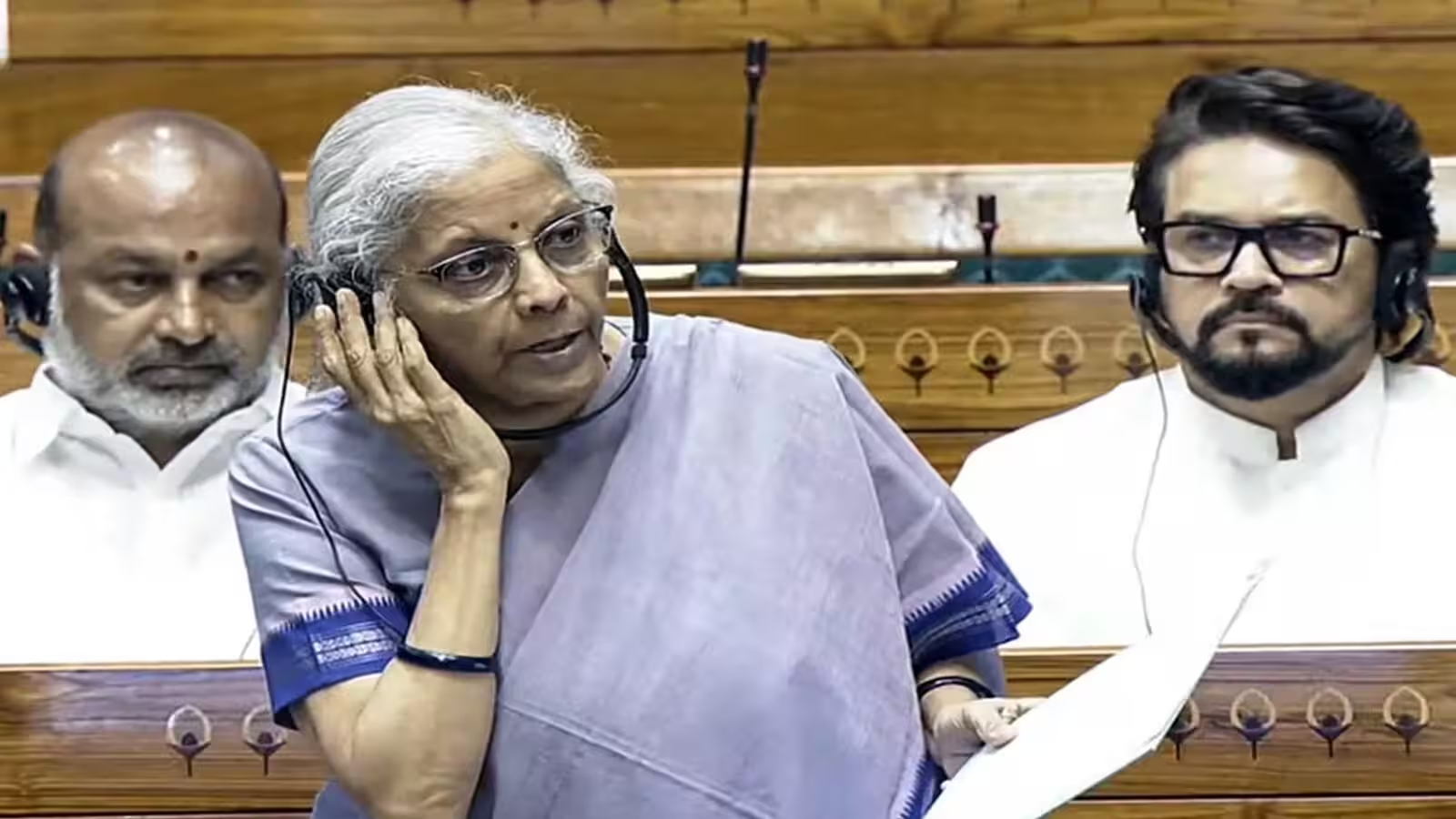
The Union Government has introduced the Taxation and Other Laws (Amendment) Bill, 2026 in the Lok Sabha. The Bill proposes changes to the tax system to attract foreign investment, support electronics manufacturing, strengthen digital infrastructure and improve ease of doing business.
Importance
- The Bill aims to make the tax system simpler and more transparent.
- It is expected to support investment in electronics, data centres, diamond trade and infrastructure.
- It will make it easier for some foreign investment funds to operate from India.
- The measures are also linked with Make in India, Digital India and Ease of Doing Business.
Key Highlights
- The Bill replaces the Income-tax (Amendment) Ordinance, 2026, issued on 5 June 2026.
- FIIs and the Bank for International Settlements (BIS) will get tax exemption on certain income from government securities.
- Some foreign companies involved in rough diamond trading and electronics components will get tax exemptions.
- The tax exemption for foreign companies supplying equipment for electronics manufacturing has been extended up to 31 March 2041.
- Some conditions for investment funds managed from India but registered abroad have been removed.
- For REITs and InvITs, the surcharge on SPVs has been increased from 10% to 25%.
- The Bill expands tax exemptions for data centres, including leased data centres in India.
- It also proposes removing the statutory provision related to Zero MDR under the Payment and Settlement Systems Act, 2007.
Static Facts
- Introduced in: Lok Sabha
- Date: 4 August 2026
- Ministry: Ministry of Finance
- Ordinance replaced: Income-tax (Amendment) Ordinance, 2026
- Key sectors: Foreign investment, electronics manufacturing, diamond trade, data centres, REITs, InvITs and digital payments
About Merchant Discount Rate (MDR)
Merchant Discount Rate (MDR) is the fee charged for processing a digital payment transaction.
- It is usually a small percentage of the transaction value.
- The amount is shared among banks, payment service providers and payment networks involved in the transaction.
- The government had introduced Zero MDR for certain digital payment modes to promote digital payments.
- The Bill proposes removing the statutory provision related to Zero MDR.