Location and Geography:
- The Dorjilung Hydropower Project is located in the eastern districts of Lhuentse and Mongar in Bhutan.
- It is situated on the Kurichhu River, a tributary of the Drangmechhu, which flows into India.
- The site lies in a mountainous region well suited for run-of-river hydropower generation.
Technical Specifications:
- Project type: Run-of-river hydropower project
- Installed capacity: 1125 megawatts
- Annual electricity generation: Approximately 4.5 terawatt-hours
- Dam type: Concrete gravity dam with a height of approximately 139.5 meters
- Design discharge: 287 cubic meters per second
- Headrace tunnel length: 15 kilometers
- Powerhouse: Underground, housing six Francis-type turbines
Project Cost and Funding:
- Total estimated cost: 1.7 billion US dollars
- Financing institution: World Bank
- Development model: Public-Private Partnership (PPP)
- Partnership and Ownership Structure
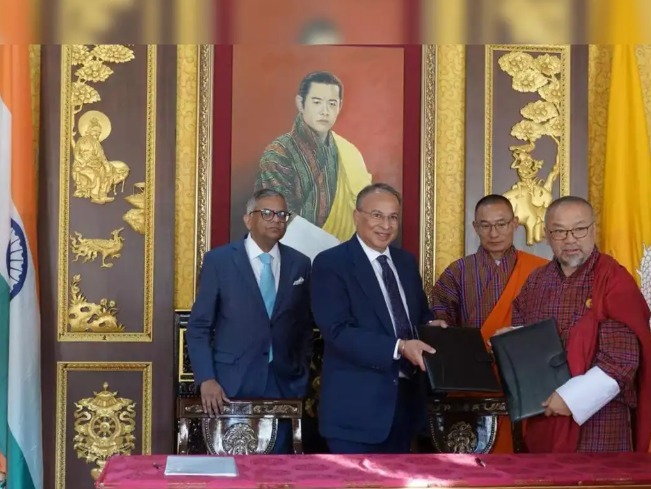
- In November 2024, Bhutan’s Druk Green Power Corporation (DGPC) signed a Memorandum of Understanding (MoU) with India’s Tata Power Company Limited.
- The project will be jointly developed under a Public-Private Partnership model.
- Ownership division: DGPC will hold 60 percent, and Tata Power will hold 40 percent.
Implementation Timeline:
- Infrastructure and preparatory work began in 2025.
- The project is expected to be commissioned by early 2032.
- Major construction will include dam building, tunnel boring, installation of turbines, grid connection, and environmental safeguards.
Strategic Significance:
- Energy cooperation
- The project will help Bhutan expand its hydropower exports to India.
- It will support clean energy access in India’s northeastern states and contribute to regional energy security.
- Foreign policy and diplomacy
- The project demonstrates India's growing use of private sector partnerships in its neighborhood diplomacy.
- It reflects Bhutan’s continued importance in India’s energy and strategic planning.
Sustainability and environment:
- As a run-of-river project, Dorjilung has relatively low environmental and social impacts compared to large reservoir-based dams.
- The project aligns with the sustainable energy goals of both Bhutan and India.
Recent Developments in 2025:
- Pre-construction activities have begun, including site access roads, geological surveys, and environmental assessments.
- A joint task force between DGPC and Tata Power is overseeing early-stage work.
- World Bank supervision ensures adherence to international environmental and social standards.
Conclusion:
- The Dorjilung Hydropower Project represents a landmark collaboration between Bhutan and India in the renewable energy sector.
- With strong public-private support, international funding, and strategic significance, the project is poised to become a model for future cross-border clean energy projects in South Asia.