Why in News
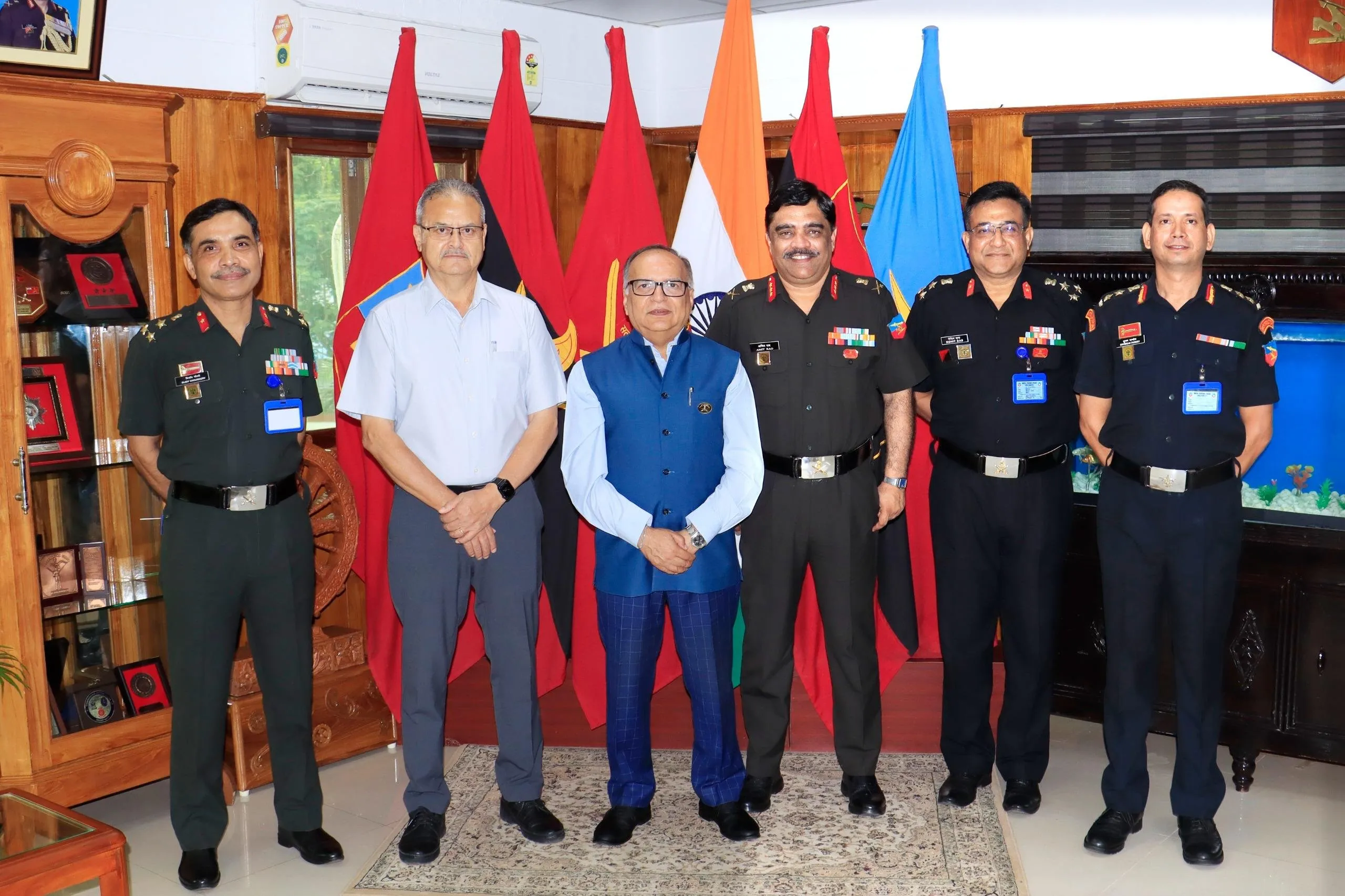
On 7 September 2026 the Ministry of Environment, Forest and Climate Change (MoEFCC) organised Swachh Vayu Diwas 2026 on the occasion of the International Day of Clean Air for Blue Skies. During the event 5th Swachh Vayu Sarvekshan Awards were presented to the best-performing cities and wards under the National Clean Air Programme (NCAP).
Key Highlights
- Ranking basis: Cities were assessed on road dust management, solid waste management (SWM), vehicular emissions, industrial pollution, construction and demolition (C&D) waste, other emissions such as DG sets and commercial units, and IEC activities for public awareness.
- Assessment process: The process started with self-assessment by cities, followed by approval from the State-level Monitoring Committee. The CPCB then evaluated the submissions, while independent committees carried out field verification before the final selection.
Cities were divided into three categories based on population:
- Below 3 lakh
- 3–10 lakh
- Above 10 lakh
Top 5 Cities — Category-I (Population Above 10 Lakh)
- Lucknow — 198
- Indore — 197
- Jabalpur — 195
- Bhopal / Agra (Joint) — 192
- Surat — 191
Top 5 Cities — Category-II (Population 3–10 Lakh)
- Rourkela — 198.5
- Firozabad / Guntur (Joint) — 195
- Amravati — 194
- Bhubaneswar — 193.5
- Jhansi — 192.5
Top 5 Cities — Category-III (Population Below 3 Lakh)
- Kalinga Nagar — 198.5
- Angul — 196.5
- Talcher — 193.5
- Eluru — 193
- Haldia — 190.6
Ward-Level Winners
The top-ranked wards in each population category were:
- Above 30,000 population: Lucknow — Zone 4, Ward 70
- 10,000–30,000 population: Bhubaneswar — BMC Ward 36 & 30 (Joint Rank 1)
- Below 10,000 population: Rourkela — RMCWD13
NCAP Performance
The government has provided ₹16,425 crore as a performance-linked grant to 130 NCAP cities for pollution-control measures.
The performance of cities was also assessed by comparing their PM10 levels in 2025–26 with the FY 2017–18 baseline:
- 108 out of 130 cities showed improvement in PM10 levels.
- 72 cities recorded more than 20% reduction.
- 26 cities recorded more than 40% reduction.
- 14 cities met the National Ambient Air Quality Standards (NAAQS).
Static Facts
- National Clean Air Programme (NCAP) was launched in January 2019 by the MoEFCC. It is India's first national-level framework focused on improving air quality.
- The original target was to reduce PM2.5 and PM10 levels by 20–30% by 2024, using 2017 as the base year. This target was later revised to 40% reduction by 2025–26.
- The PRANA portal (Portal for Regulation of Air-pollution in Non-Attainment cities) is used to track air quality management and fund utilisation under NCAP.
- The Swachh Vayu Sarvekshan framework was first introduced in 2022–23 to assess and rank cities based on their air quality management efforts.
- CPCB carries out the technical evaluation for the city rankings.
- CAQM (Commission for Air Quality Management in NCR and Adjoining Areas) is a statutory body established under the 2021 Act.
- The International Day of Clean Air for Blue Skies is observed globally on 7 September and was designated by the United Nations.