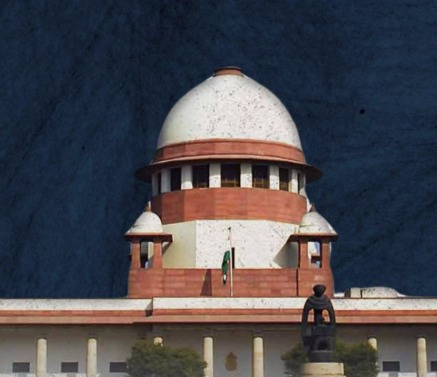
- The Supreme Court has recently issued a notice on a petition filed by members of the Koya tribe challenging the Telangana High Court’s order that upheld the Scheduled Tribe status of the Lambadi, Sugali, and Banjara communities.
- The petitioners argued that the extension of Scheduled Tribe recognition to these communities adversely affects the reservation benefits and welfare schemes meant for smaller tribal groups like the Koyas.
- The Koya are among India’s few multi-racial and multi-lingual tribal communities, primarily residing in the forests, plains, and valleys along both banks of the Godavari River across Andhra Pradesh, Telangana, Chhattisgarh, and Odisha.
- According to the 2011 Census, their population stands at 7,38,629. The community identifies itself as “Koithur,” tracing its ancestral origins to Bastar in present-day Chhattisgarh.
- The Koya people speak Koya Basha, a Dravidian language closely related to Gondi and heavily influenced by Telugu. Most community members are also conversant in Gondi and Telugu.
- Traditionally pastoralists and shifting cultivators, the Koyas have now largely moved towards settled farming, cultivating millets such as jowar, ragi, and bajra, supplemented by animal husbandry and forest produce collection.
- Socially, the Koya follow a clan-based system, with each person born into one of the five gotrams.
- They practice monogamy, maintain patrilineal families known as “Kutum,” and live in villages of varying sizes, each led by a village chief called “Peda.” Culturally, they worship a mix of tribal deities and Hindu gods, with “Mother Earth” being the most revered.
- Festivals like Vijji Pandum and Kondala Kolupu form an integral part of their agricultural and spiritual life, celebrated with their vibrant Permakok or Bison Horn Dance.
- The ongoing legal battle reflects broader concerns within the tribal community about the equitable distribution of affirmative action benefits and the preservation of their cultural and socio-economic rights.
Limited-time offerGet up to 75% OFFGrab the offer
Supreme Court Issues Notice on Koya Tribe Plea Over ST Status of Other Communities
Koya Members Challenge Telangana HC Order Granting ST Benefits to Lambadi, Sugali, and Banjara
Check your eligibility now