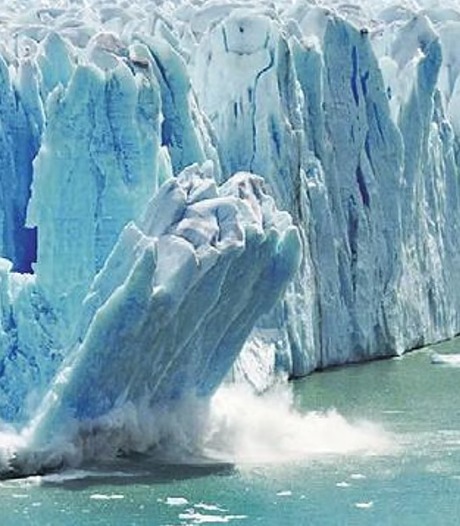
- A recent study conducted by IIT Indore in collaboration with international researchers has revealed that the Gangotri Glacier—one of the largest glaciers in the Himalayas—has lost 10% of its snowmelt flow over the past 40 years, primarily due to climate change.
- The Gangotri Glacier, located in the Uttarkashi district of Uttarakhand in the Garhwal Himalayas, is the primary source of the Ganges, India’s largest river.
- It originates from the northern slopes of the Chaukhamba range and is fed by snow and ice from peaks like Shivling, Thalay Sagar, Meru, and Bhagirathi III.
- The glacier stretches about 30 km in length and 4 km in width, lying at an altitude of around 4,000 meters near the Tibet border.
- Its terminus, popularly known as Gaumukh, resembles a cow’s mouth, from which the Bhagirathi River emerges and later joins the Alaknanda River to form the Ganges at Devprayag.
- Gangotri Glacier is also of immense religious significance in Hinduism, attracting thousands of pilgrims annually who trek to Gaumukh, the sacred source of the Ganges.
- The study underscores the urgent need for climate action to preserve this vital glacier and the water resources it sustains.
Limited-time offerGet up to 75% OFFGrab the offer
Study Reveals 10% Loss in Gangotri Glacier’s Snowmelt Over Four Decades
Climate Change Impact Threatens the Primary Source of the Ganges
Check your eligibility now