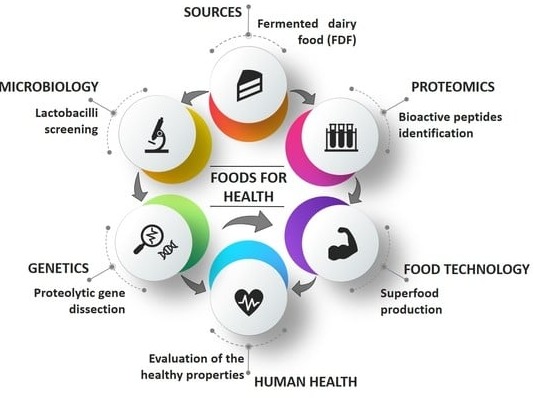
- A recent study on fermented foods has revealed that the health effects of Bioactive Peptides (BAPs) vary across populations, underscoring their potential in developing personalized nutrition strategies for India’s diverse demographic groups.
- These findings suggest that dietary recommendations involving fermented foods rich in BAPs may need to be tailored according to genetic, cultural, and lifestyle variations among different communities.
- Bioactive peptides are short chains of amino acids, the building blocks of proteins, linked together by peptide (amide) bonds.
- To qualify as bioactive, these peptides must exert a positive physiological effect on health. While some BAPs occur naturally, most are hidden within parent proteins and released through enzymatic processes, fermentation, or digestion.
- The major sources of BAPs include milk, cheese, fermented fruits and vegetables (pickles), eggs, fish, meat, soybean products, and plants.
- In addition to natural extraction, some bioactive peptides are also produced synthetically.
- BAPs are emerging as a new generation of biological regulators, offering significant health benefits by influencing the digestive, cardiovascular, immune, endocrine, and nervous systems.
- They also show potential in preventing oxidation, microbial spoilage in foods, and in improving the treatment of chronic diseases, thereby enhancing quality of life.
- While both peptides and proteins are composed of amino acid chains, peptides are generally shorter (fewer than 100 amino acids) and less structured, whereas proteins are longer and capable of forming complex three-dimensional conformations.
- The study’s insights highlight the importance of integrating population-specific dietary science into India’s nutritional planning, especially as bioactive peptides continue to gain global recognition in healthcare, food technology, and preventive medicine.
Limited-time offerGet up to 75% OFFGrab the offer
Study Highlights Population-Specific Benefits of Bioactive Peptides in Fermented Foods
Research Suggests Potential for Personalized Nutrition in India’s Diverse Population
Check your eligibility now