Why in News?
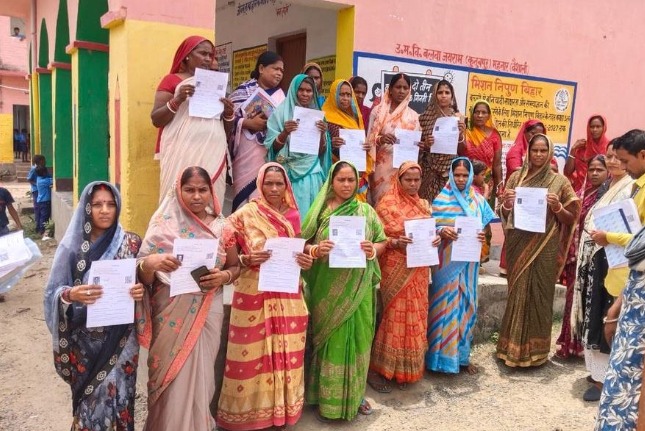
- The Supreme Court (SC) is reviewing the Election Commission of India’s Special Intensive Revision (SIR) of electoral rolls in Bihar and suggested accepting Aadhaar, voter ID, and ration cards as valid documents for voter enumeration.
- However, the SC rejected the argument made by petitioners that the ECI lacked the authority to carry out the revision.
About Electoral Rolls:
- An electoral roll is the official list of eligible and registered voters in a constituency. It is used to verify voter identity and ensure transparency during elections.
- Prepared under: Representation of the People Act (RP Act), 1950
- Eligibility: Citizens aged 18+ ordinarily residing in the constituency (Sec 19)
- Exclusion: Non-citizens (Sec 16)
Special Intensive Revision (SIR):
- SIR is a focused, time-bound house-to-house verification of electoral rolls, conducted by Booth Level Officers (BLOs) to
- Add new voters
- Remove ineligible names
- Update/correct details
- Legal basis: Section 21, RP Act, 1950
- Purpose: Ensures accurate, inclusive, and updated voter lists before major elections
Constitutional Basis:
- Article 324: Empowers the Election Commission of India (ECI) to supervise and control elections and voter lists
- Article 326: Grants universal adult suffrage to citizens aged 18+, barring legal disqualifications
Judicial Support:
Mohinder Singh Gill v. CEC (1977):
- Upheld ECI’s wide powers under Article 324
- Allowed ECI to act independently where law is silent (Articles 327, 328)
- Limited judicial interference during elections (Article 329(b))
- Permitted ECI to take swift decisions in exceptional cases
Past Revisions:
- SIRs were conducted in various years (1952–56, 1961, 1983–84, 1992, 2003, etc.).
Last SIR in Bihar: 2003