Why is it in the news?
The Supreme Court allowed passive euthanasia in the Harish Rana case by permitting withdrawal of life-support treatment.
This marks the first implementation of the 2018 Common Cause judgment recognising the right to die with dignity.
Category: Polity
Important Points:
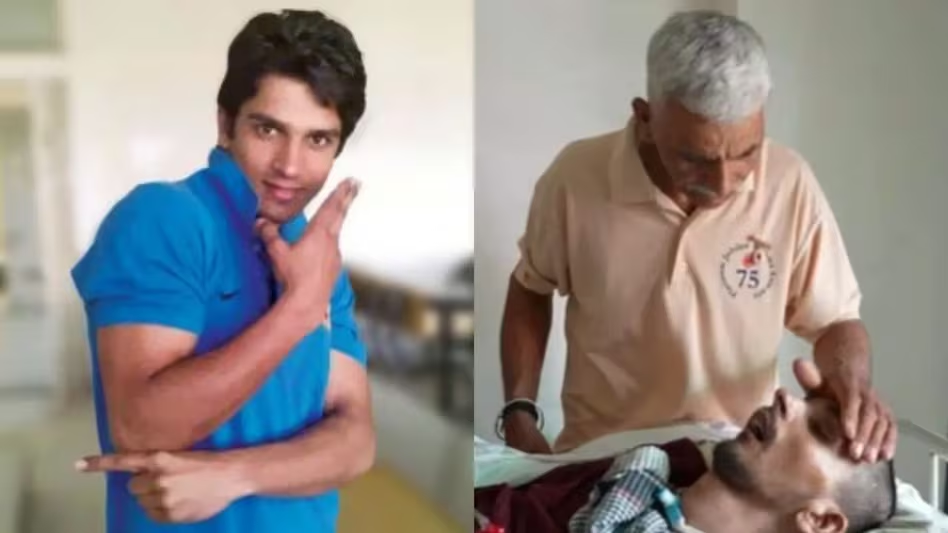
● The Supreme Court permitted passive euthanasia for Harish Rana, who remained in a permanent vegetative state for over 13 years.
● Harish Rana suffered severe brain injuries after falling from a fourth-floor building in Chandigarh in 2013.
● He had 100% quadriplegia and was sustained through Clinically Assisted Nutrition and Hydration using PEG tubes.
● The Court accepted recommendations of medical boards and the family to withdraw life-sustaining treatment.
● The patient was directed to be admitted to the palliative care department at AIIMS Delhi for end-of-life care.
● The ruling reaffirmed the right to die with dignity as part of Article 21 of the Constitution.
● The Court held that Clinically Administered Nutrition through PEG tubes constitutes medical treatment and can be withdrawn.
● The Supreme Court waived the standard 30-day reconsideration period to prevent unnecessary suffering.
● It directed the Union Government to enact comprehensive legislation on end-of-life care.