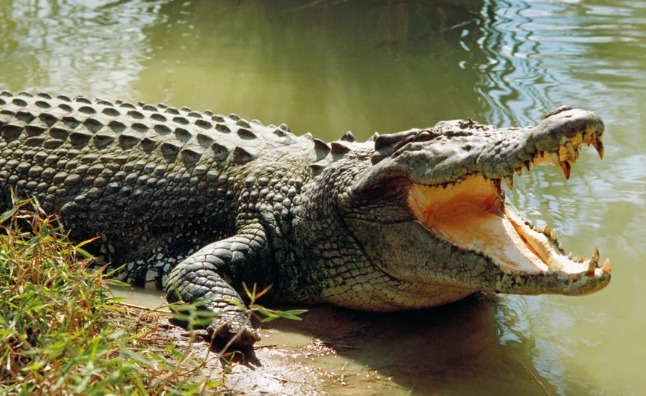
- According to a 2025 survey by the West Bengal Forest Department, the estimated population of saltwater crocodiles (Crocodylus porosus) in the Sundarban Biosphere Reserve (SBR) has risen to 220–242 individuals, compared to 204–234 in 2023–24. The latest count recorded 213 direct sightings (up from 168 the previous year), with a notable increase in hatchlings, indicating strong conservation outcomes and a healthy age structure.
Population breakdown (2025):
- Adults: 125 (58.7%)
- Juveniles: 88 (41.3%)
- Hatchlings: 23 (10.8%)
- Preferred habitat: Creeks with widths of 10–130m, salinity range 10–23ppt, basking temperatures 20–30°C in winter.
- The encounter rate improved to one crocodile per 5.5km of transect from 7.6km last year, highlighting higher density and survivability.
About the Saltwater Crocodile
- Scientific Name: Crocodylus porosus
- Other Names: Estuarine crocodile, Indo-Pacific crocodile, marine crocodile, sea crocodile, saltie.
- Description: Largest and heaviest living reptile worldwide. Males average 5m and 500kg, females under 3m and less than 100kg. Skin: dark, greenish-brown with lighter underbellies; thick, armored scales.
- Behavior: Solitary apex predators, highly territorial, especially adult males.
- Distribution: Found in saltwater and brackish wetlands from India’s east coast, Southeast Asia, northern Australia, and Micronesia.
- Conservation & Ecological Importance
- Status: Schedule I (Indian Wildlife Protection Act, 1972); IUCN Red List: Least Concern (global).
- Ecological role: Apex predator, indicator of aquatic ecosystem health, controls prey, maintains biodiversity, helps in scavenging.
- Conservation efforts: Sundarbans and Bhagabatpur Crocodile Project (since 1976) have significantly contributed to population recovery, demonstrated by increases across all age groups and rare hatchling sightings—suggesting successful breeding and protected nesting habitats.
- Challenges and Recommendations
- Threats include loss of nesting grounds due to climate change, sea-level rise, and increasing salinity. Proactive habitat management and regular monitoring are recommended for sustainable population viability.
- The Sundarbans’ saltwater crocodile population shows a steady and encouraging rise in 2025, underlining the success of long-term conservation efforts and the importance of sustained habitat protection and monitoring.