
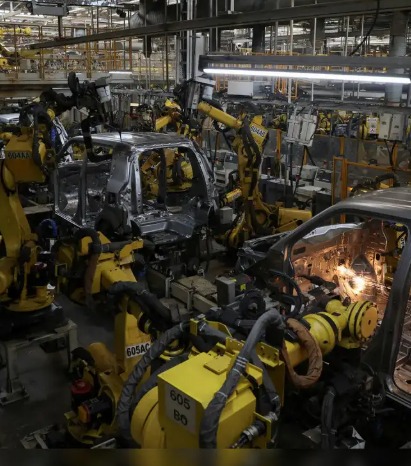
- Amid rising concerns over supply chain dependence, automakers are reducing the use of rare earth magnets in non-essential vehicle components to minimize reliance on limited global sources.
- The move comes as demand continues to surge across industries, especially in the electric vehicle (EV) sector.
About Rare Earth Magnets:
- Rare earth magnets are high-performance permanent magnets made primarily from rare earth elements such as Neodymium (Nd), Samarium (Sm), and Dysprosium (Dy).
- They are known for exceptional magnetic strength, high energy density, and superior performance compared to conventional magnets.
- Despite their advantages, these magnets are brittle and prone to corrosion, often requiring nickel plating for durability.
- China dominates the global supply chain, accounting for nearly 90% of processing capacity.
Types of Rare Earth Magnets
Neodymium-Iron-Boron (Nd-Fe-B):
- Most powerful type, widely used in electronics and EVs.
Samarium Cobalt (SmCo):
- More resistant to heat and corrosion, used in defense and aerospace.
- Both types come in different grades with varying strengths and physical properties.
Uses of Rare Earth Magnets:
- Medical: MRI machines, PET imaging, and X-rays.
- Aviation & Defense: Precision instruments and military equipment.
- Technology: Smartphones, consumer electronics, hard drives.
- Energy & Transport: Electric vehicles (EVs), renewable energy systems.
- Other: Jewelry, industrial machinery.
- The growing strategic importance of rare earth magnets makes them critical for the green energy transition, national security, and advanced technology, even as industries look for alternatives to reduce dependency.