Why in News?
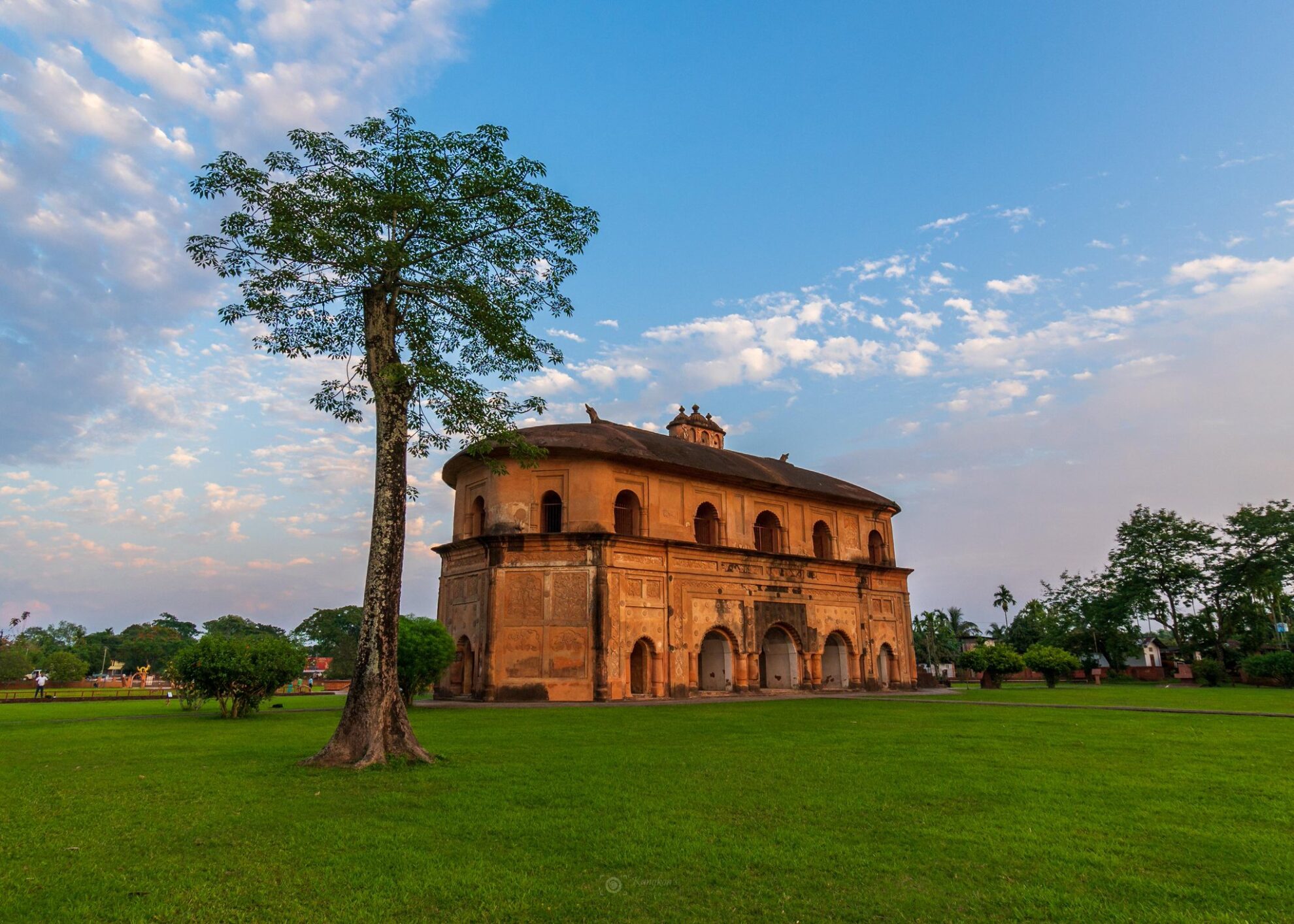
India has formally submitted the Rangpur-Sivasagar Historic Ensemble, the historic capital complex of the Ahom dynasty in Assam, to UNESCO’s Tentative List of World Heritage Sites. This is an important step towards its eventual nomination and consideration for World Heritage status.
The move comes after the Charaideo Moidams of the Ahom era were inscribed on the UNESCO World Heritage List in 2024.
About Rangpur-Sivasagar Ensemble
- The Rangpur-Sivasagar Ensemble represents the political and cultural centre of the Ahom kingdom in the Brahmaputra Valley.
- The Ahom dynasty ruled significant parts of present-day Assam for nearly six centuries.
- The ensemble includes palaces, temples, water tanks and other examples of Ahom architecture and engineering.
- It includes Rang Ghar, one of the oldest surviving amphitheatres in Asia.
- The site reflects the distinctive cultural, architectural and technological traditions developed during the Ahom period.
UNESCO Criteria
The nomination is based on Criteria (iii) and (iv):
- Criterion (iii): The site bears exceptional testimony to a cultural tradition or civilisation, whether living or disappeared.
- Criterion (iv): The site represents an outstanding example of architecture, technology or landscape that illustrates a significant stage in human history.
Ahom Dynasty
- Founder: Swargadeo Chaolung Sukapha
- Established: 1228
- Region: Brahmaputra Valley, Assam
- End of Ahom rule: 1826
- The dynasty is known for its long political continuity and distinctive traditions of architecture, water management and engineering.
Charaideo Moidams
The Charaideo Moidams are the royal burial mounds of the Ahom dynasty.
- Located in Charaideo, Assam.
- Inscribed on the UNESCO World Heritage List in 2024.
- They represent the funerary traditions and beliefs of the Ahom royal family.
The two heritage sites together highlight different aspects of Ahom civilisation — Charaideo as the royal burial site and Rangpur-Sivasagar as the centre of political power.