Why is it in the news?
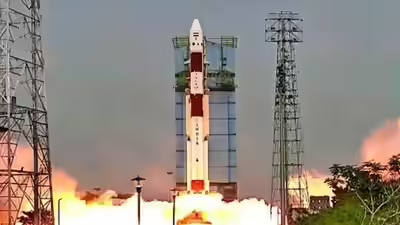
→ ISRO faced scrutiny after two consecutive PSLV mission failures: PSLV-C61 (May 2025) and PSLV-C62 (Jan 2026).
→ Both failures linked to third-stage (PS3) anomalies, raising concerns on quality control and commercial credibility.
Category: S&T
Important Points
- PSLV-C61 failed due to sudden drop in combustion chamber pressure in PS3 while deploying EOS-09.
- PSLV-C62 failed due to roll-rate disturbance during PS3 burn while launching EOS-N1 (Anvesha) plus 15 co-passenger satellites.
- Loss of all 16 satellites occurred in PSLV-C62 including strategic and commercial payloads.
- PS3 is a solid motor using HTPB; cannot be throttled or shut down once ignited.
- Minor defects in PS3 can cause uneven burning, pressure loss or side-venting of exhaust gases.
- Both failures indicate PS3-specific common failure mode.
- PSLV is ISRO’s third-generation launch vehicle; first successful launch in October 1994.
- PSLV payload capacity: ~1,750 kg to 600 km SSPO and ~1,425 kg to Sub-GTO.
- PSLV structure: four stages (PS1 solid with HTPB, PS2 liquid Vikas using UDMH/N₂O₄, PS3 solid HTPB, PS4 liquid MMH/MON).
- Achievements include Chandrayaan-1 and Mars Orbiter Mission.
- India’s global small-satellite launch share fell from ~35% (2017) to nearly zero by 2024.
- Strategic impacts include surveillance gaps from loss of EOS-09 and EOS-N1.
- Rising insurance premiums expected due to consecutive failures.