Why in News?
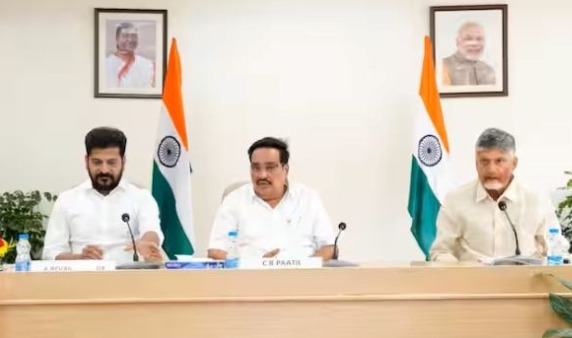
- The Central Government has announced the formation of a high-level committee to resolve disputes between Andhra Pradesh (AP) and Telangana.
- The dispute revolves around the proposed Polavaram–Banakacherla Link Project (PBLP) and broader Krishna-Godavari river water-sharing issues.
What is the Polavaram–Banakacherla Link Project (PBLP)?
Objective: To divert 200 TMC of surplus Godavari floodwaters to Krishna and Penna river basins.
- Target Area: Intended to alleviate water scarcity in the drought-prone Rayalaseema region of southern Andhra Pradesh.
Water Route:
- Water will be drawn from the Polavaram Dam
- It will pass through the Prakasam Barrage
- Lifted to the Bollapalli reservoir
- Carried via tunnels through the Nallamala forest
- Discharged into the Banakacherla reservoir in Rayalaseema
Significance:
- Enhances irrigation potential
- Improves drinking water supply
- Promotes agricultural sustainability
- Strengthens regional water security and livelihoods
Challenges and Disputes:
- Alleged Violation of the 2014 Reorganisation Act
- Telangana accuses Andhra Pradesh of launching the project without approval from the Apex Council, Krishna River Management Board (KRMB), and Central Water Commission (CWC).
Disputed Surplus Water Claim:
- Telangana challenges the claim of 200 TMC surplus water, arguing that no tribunal or central authority has officially adjudicated or approved the quantity.
Environmental Concerns and Pending Clearances:
- Though the Polavaram Project received environmental clearance in 2005, the Expert Appraisal Committee (EAC) has called for a fresh environmental review.
- There are unresolved submergence issues involving Odisha and Chhattisgarh.
Unauthorised Inter-Basin Diversion:
- Telangana objects to transferring Godavari water into the Krishna basin without mutual agreement, fearing reduced water availability for its own planned projects.
Breach of Cooperative Federalism:
- Telangana alleges that Andhra Pradesh’s unilateral actions violate the principles of cooperative federalism, undermining established consensus-based mechanisms for managing inter-state river waters.
Conclusion:
- The PBLP controversy highlights the urgent need for transparent inter-state coordination, scientific water accounting, and central intervention to ensure equitable, legal, and sustainable use of India's shared river systems.