
Why is it in the news?
→ A study published in Science Translational Medicine found that high-dose inhaled nitric oxide reduced drug-resistant Pseudomonas in a large-animal ICU model.
→ The research highlights its potential medical use against resistant infections.
Category: S&T
Important Points
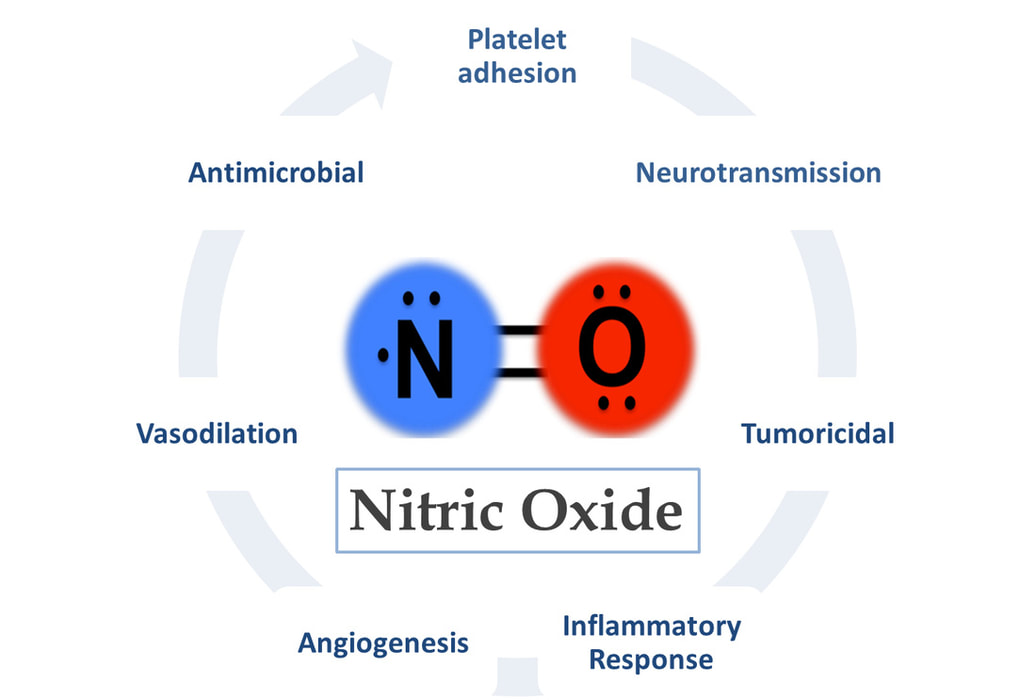
- Nitric oxide exists in gaseous state and is composed of one nitrogen and one oxygen atom.
- First prepared around 1620 by Jan Baptista van Helmont and studied in 1772 by Joseph Priestley.
- Formed through nitrogen oxidation. Can be created during lightning or commercially by burning ammonia. It is a colorless, toxic and non-combustible gas that accelerates burning of combustible materials. Found naturally in the environment and within parts of the human body.
- Plays important chemical signalling roles in humans and animals. Transmits signals in cardiovascular, nervous and immune systems.
- Synthesized from amino acid L-arginine with nitric oxide synthase.
- Helps regulate blood pressure by dilating blood vessels and acts as a neurotransmitter.
- Generated by automotive engines and thermal power plants and acts as air pollutant.