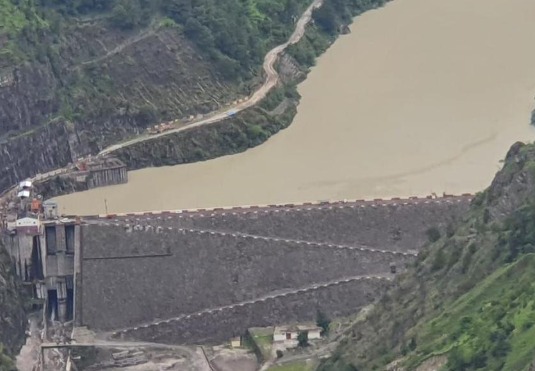
- In a major rescue operation, nineteen workers and officials of the National Hydroelectric Power Corporation (NHPC) were safely evacuated after being trapped for nearly twenty-two hours inside a tunnel of the 280 MW Dhauliganga Hydroelectric Project in Dharchula, Pithoragarh district of Uttarakhand.
- The incident drew attention to the challenges faced by workers in high-altitude infrastructure projects in the Himalayan region.
- The Dhauliganga Hydroelectric Project, constructed on the Dhauliganga River, is one of the key hydropower stations in Uttarakhand.
- The river, a significant tributary of the Alaknanda and an important component of the Ganga river system, provides the necessary flow for the project. Construction of the project began in 2000 and it was commissioned in 2005.
- Owned and operated by NHPC, the plant has an installed capacity of 280 MW and functions as a run-of-river project.
- The dam of the project is a concrete-faced rock-fill embankment structure standing 56 meters high and extending 315 meters in length.
- It supports a hydro reservoir with a storage capacity of 6.2 million cubic meters. With a gross head of 310 meters and a net head of 297 meters, the project plays a significant role in power generation for the region while also reflecting the engineering challenges of harnessing Himalayan rivers for clean energy.
- The recent rescue highlights both the importance of the project to Uttarakhand’s power grid and the risks associated with working in such demanding environments.
- Authorities have assured that safety measures will be further strengthened to prevent similar incidents in the future.
Limited-time offerGet up to 75% OFFGrab the offer
Nineteen Rescued After Being Trapped in Dhauliganga Hydroelectric Project Tunnel
Workers and NHPC Officials Safe After 22-Hour Rescue Operation in Uttarakhand
Check your eligibility now