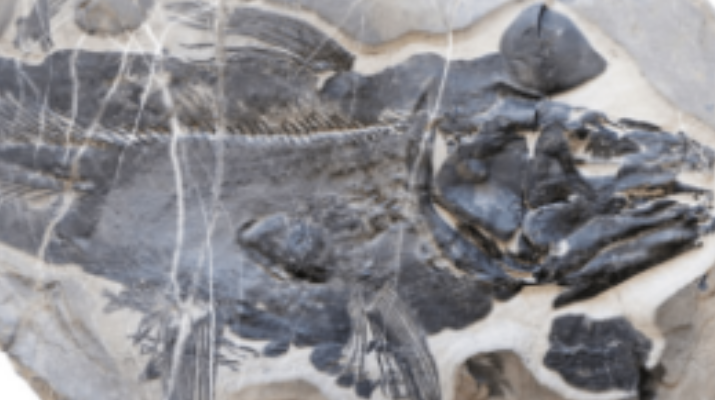
- Palaeontologists identified a new species of coelacanth from Early Triassic deposits in China’s Anhui province.
- जीवाश्म वैज्ञानिकों ने चीन के अनहुई प्रांत में प्रारंभिक ट्राइएसिक जमा से कोएलाकैंथ की एक नई प्रजाति की पहचान की।
- The new species is named Whiteia anniae and is the first record of the genus Whiteia in Asia.
- नई प्रजाति का नाम व्हाइटिया एनिया (Whiteia anniae) है और यह एशिया में व्हाइटिया जीनस का पहला रिकॉर्ड है।
- Coelacanths are an ancient lineage of lobe-finned fishes (sarcopterygians) that first appeared over 400 million years ago.
- कोएलाकैंथ लोब-फिन वाली मछलियों (सार्कोप्टरिजियन) का एक प्राचीन वंश है जो सबसे पहले 400 मिलियन वर्ष पहले दिखाई दिया था।
- They are often referred to as “living fossils” due as they survived multiple mass extinctions.
- कई सामूहिक विलोपन से बचने के कारण इन्हें अक्सर "जीवित जीवाश्म" कहा जाता है।
- Whiteia anniae lived around 249 million years ago during the Smithian age of the Early Triassic.
- व्हाइटिया एनिया प्रारंभिक ट्राइएसिक के स्मिथियन युग के दौरान लगभग 249 मिलियन वर्ष पहले अस्तित्व में थी।
- The discovered specimens were notably larger (41–46 cm) than most previously known smaller species of Whiteia.
- खोजे गए नमूने व्हाइटिया की पिछली ज्ञात छोटी प्रजातियों की तुलना में काफी बड़े (41-46 सेंटीमीटर) थे।
- This discovery significantly broadens the genus's known geographical distribution, which was previously limited to Madagascar, Africa, and North America.
- यह खोज जीनस के ज्ञात भौगोलिक वितरण का काफी विस्तार करती है, जो पहले मेडागास्कर, अफ्रीका और उत्तरी अमेरिका तक सीमित था।
- The finding challenges the traditional view of coelacanths and suggests their body forms were far more diverse than previously believed.
- यह खोज कोएलाकैंथ के पारंपरिक दृष्टिकोण को चुनौती देती है और बताती है कि उनके शरीर के रूप पहले की तुलना में कहीं अधिक विविध थे।
Limited-time offerGet up to 75% OFFGrab the offer
New Coelacanth(Ancient Fish) Species Discovered in China
New Coelacanth(Ancient Fish) Species Discovered in China
Check your eligibility now