Why is it in the news?
→ IISc Bengaluru researcher received New York Academy of Sciences 2025 and Tata Sons’ Transformation Prize.
→ Awarded for developing magnetic nanorobots enabling precise, minimally invasive therapies.
Category: S&T
Important Points
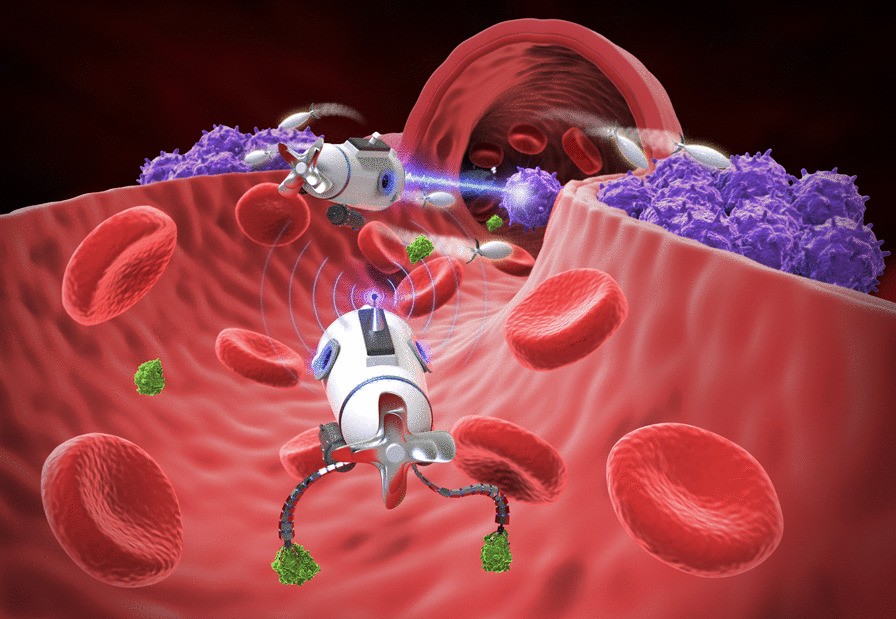
- Magnetic nanorobots are microscopic machines coated with magnetic materials like iron oxide.
- Externally guided by magnetic fields; no onboard power source.
- Use a corkscrew-like helical tail to move through tissues.
- Biocompatible structure made of silica and iron; can be coated with cancer drugs.
- Enable targeted drug delivery deep inside tumours with reduced damage to healthy tissue.
- Applications: drug delivery, hyperthermia, imaging-guided therapy, diagnostics, dentistry, antimicrobial therapy.
- Nanotechnology works at ≤100 nanometres by manipulating atoms and molecules.
- Properties: quantum size effect, enhanced catalysis, superparamagnetism, high mechanical strength.
- Supports diagnostics, regenerative medicine, vaccines, and immunotherapy (T-cell activation, mRNA platforms).
- Challenges: nanotoxicity, bioaccumulation, regulatory gaps, ethical concerns, high costs, nano-divide.
- Calls for green nanotechnology, environmental impact assessments, scalable manufacturing, and ethical governance.