Why in News?
- In 2025, scientists and tribal farmers jointly appealed to the Central Government to include Mithun (Bos frontalis) under key livestock development programmes such as the National Livestock Mission (NLM).
- The demand focuses on species conservation, sustainable farming, and tribal livelihood enhancement in Northeast India.
Ecological and Cultural Significance:
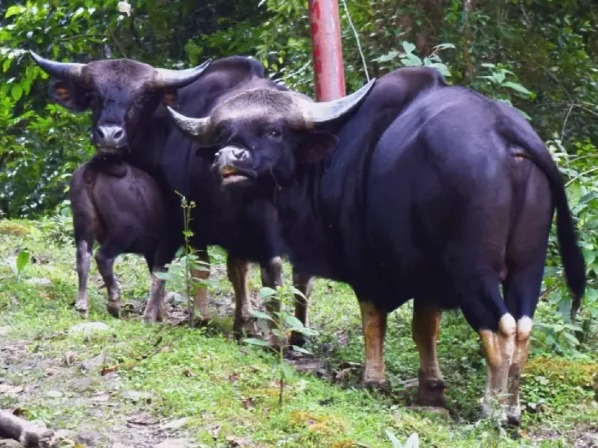
- Mithun is a semi-domesticated bovine species native to the Eastern Himalayan region.
- It holds deep cultural value among tribal communities in Arunachal Pradesh, Nagaland, Manipur, Mizoram, and parts of Assam.
- Recognised as the state animal of Arunachal Pradesh and Nagaland.
- Contributes to food security through high-quality meat and milk, especially in remote and hilly areas.
Population and Distribution:
- India hosts about 3.9 lakh Mithun, which is 95% of the global population.
- Arunachal Pradesh accounts for nearly 91% of India's Mithun population.
- Despite a limited geographical range, Mithun plays a critical ecological and economic role in the Northeast.
The population is declining due to:
- Habitat loss
- Unscientific farming practices
- Indiscriminate slaughter
Mithun is excluded from major central livestock schemes, limiting access to:
- Scientific breeding support
- Veterinary healthcare
- Financial incentives
- Market linkages
- The Indian Council of Agricultural Research – National Research Centre on Mithun (ICAR-NRCM) has appealed for inclusion in national schemes to support conservation and scientific rearing.
Conservation Value:
- Mithun is well adapted to subtropical and fly-infested environments, making it a unique genetic resource.
- Recognised as a “Vulnerable” species by the International Union for Conservation of Nature (IUCN).
Conservation is vital for:
- Climate resilience
- Biodiversity preservation
- Sustainable agriculture in the Eastern Himalaya
Recent Developments:
- In 2024, the Food Safety and Standards Authority of India (FSSAI) recognised Mithun as a food animal.
- Listed in the FAO's Domestic Animal Diversity Information System (DAD-IS).
- These recognitions highlight Mithun's growing national and global significance in food systems and biodiversity databases.
Conclusion:
- Including Mithun in national livestock schemes could provide the scientific, financial, and policy support needed for its conservation and sustainable management.
- It would benefit tribal farmers, promote climate-adapted agriculture, and protect a culturally revered and ecologically valuable species.