
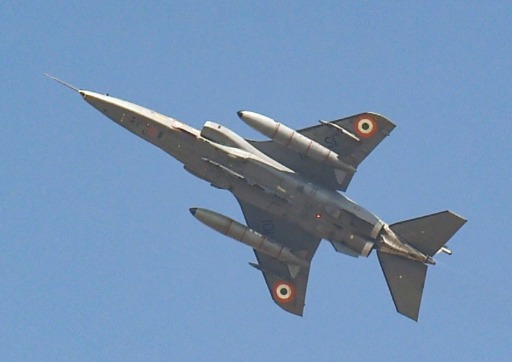
What is the MiG-21?
- The MiG-21 is a Soviet-designed, single-engine supersonic jet fighter, renowned for its speed, compact design, and high maneuverability.
- It became the most widely used supersonic fighter in history, especially during the Cold War.
Development & Induction in India:
- Designer: Mikoyan-Gurevich Design Bureau, USSR (1950s)
- Indian Production: Licensed to Hindustan Aeronautics Ltd (HAL) from the 1960s
- First Inducted into IAF: 1963
- Role in IAF: Became the backbone of India’s air power from the 1970s to the early 2000s
Key Features:
- Speed: Supersonic, capable of Mach 2.0+
- All-weather, multi-role aircraft
Armament:
- Air-to-air missiles
- Bombs
- 23 mm twin-barrel cannon
Variants:
- Notably the MiG-21 Bison (with radar upgrades, avionics, and air-to-air combat capability)
Operational Significance:
- 1965 & 1971 India-Pakistan Wars: Played pivotal combat roles
- India’s first non-Western origin combat aircraft
- Helped India achieve air superiority and operational independence
Controversy & Limitations:
- Nicknamed “Flying Coffins” due to high crash rate
- Over 400 crashes since the 1970s
- Resulting in deaths of 200+ pilots and 50+ civilians
Issues:
- Aging airframe
- Outdated safety and ejection systems
- Delayed retirements due to IAF fighter jet shortages
Replacement & Phase-Out Plan:
- Being replaced by HAL Tejas Mk-1A, an indigenous multirole fighter
- IAF strength currently at 29 squadrons, against a sanctioned strength of 42.5
- Final retirement of remaining MiG-21 squadrons expected by 2025–26