Why in News?
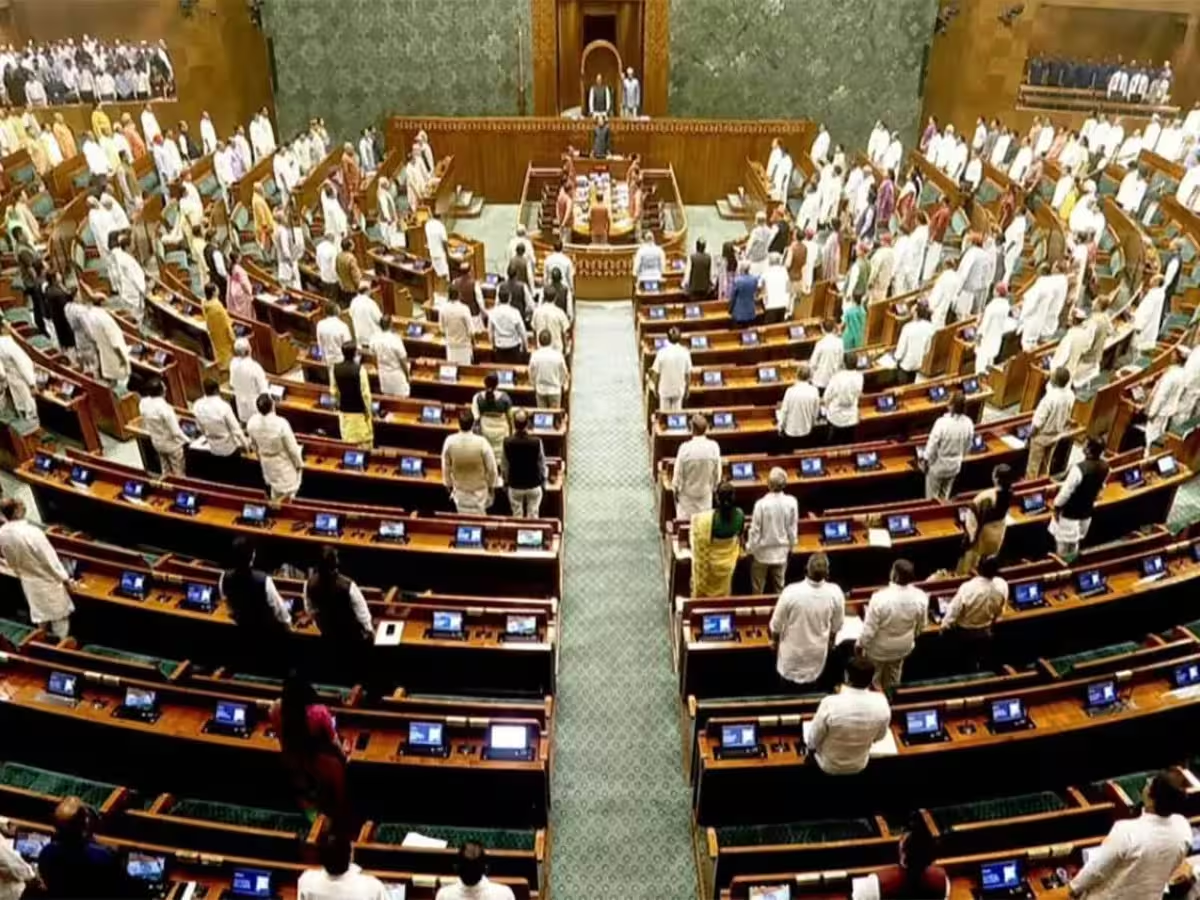
The Monsoon Session of Parliament ended on 13 August 2026. As per data released by PRS Legislative Research, the Lok Sabha recorded one of its lowest productivity levels in the last 22 years.
Key Points
- The Lok Sabha worked for around 15% of its scheduled time, according to PRS data.
- The Rajya Sabha functioned for about 33% of its scheduled time.
- Parliamentary Affairs Minister Kiren Rijiju gave different figures, putting the productivity of the Lok Sabha at 19% and the Rajya Sabha at 39%.
- Repeated disruptions and disagreements between the government and Opposition affected the functioning of both Houses.
- Since 2004, the Lok Sabha had recorded lower productivity only during the Winter Sessions of 2010 and 2013, when it functioned for 5% and 8% of the scheduled time, respectively.
- The Winter Session of 2016 also recorded 15% productivity.
- The Lok Sabha recorded its highest productivity since 2014 at 148% during the February 2024 Budget Session, when the House worked beyond its scheduled hours.
Reasons for Declining Parliamentary Productivity
- Increasing political differences have led to more disruptions and less time for discussion.
- Parliament now meets for around 70 days a year on average, compared with nearly 120–140 days a year in the 1950s.
- Frequent disruptions affect Question Hour, which allows MPs to seek answers from the government.
- Several Bills are passed with limited debate and scrutiny.
- The role of Parliamentary Standing Committees in examining Bills has also declined.
- Earlier, discussions between the government and Opposition often helped resolve differences and allowed Parliament to function smoothly.
- Growing mistrust between the government and Opposition has made it difficult to reach such agreements.
- Political attention is increasingly focused on protests and confrontation, rather than detailed discussion on legislation.
Impact
- Weak legislative scrutiny: Bills may not receive enough discussion or examination before being passed.
- Reduced accountability: Less time for Question Hour and debates limits the ability of MPs to question the government.
- Declining public trust: Repeated disruptions can affect people's confidence in Parliament as a place for meaningful debate.
- Weakening of parliamentary practices: Frequent passage of Bills without detailed discussion may weaken established parliamentary norms.
- Impact on law-making: Reduced debate and scrutiny can affect Parliament's important role in making laws, discussing public issues and holding the government accountable.