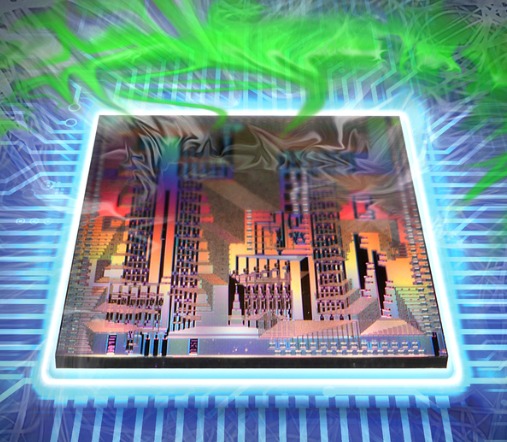
- Light-based computers, also called optical computers, process information using photons (light particles) instead of electrons. This technology offers unprecedented speed, energy efficiency, and bandwidth—making it especially suited for artificial intelligence (AI), machine learning, and big data applications.
- A recent breakthrough by research teams at Tampere University (Finland) and Université Marie et Louis Pasteur (France) demonstrated AI image recognition using light transmitted through glass fibres.
- In their experiment, data such as an image was converted into a light pulse, passed through an optical fibre where light showed non-linear responses, and then decoded based on its colour spectrum “fingerprint.” The transformed signal successfully identified images with 91–93% accuracy, proving the viability of optical computing.
- Speed: Photons travel faster than electrons, enabling near-instant computations.
- Efficiency: Produces less heat, lowering power consumption compared to silicon chips.
- Parallelism: Multiple data streams can be processed simultaneously using different light wavelengths.
- Scalability: Works optimally when fibre length and light intensity are finely tuned.
- Potential applications range from faster AI and neural network training, energy-efficient supercomputing for climate and genomic research, enhanced telecom networks with lower latency, to defence and space systems requiring rapid satellite imaging and surveillance analysis.
- Optical computing stands at the frontier of next-generation technology. By harnessing the power of light, it can revolutionise global computing infrastructure, making future AI, data centres, and communication networks faster, greener, and more powerful.
Limited-time offerGet up to 75% OFFGrab the offer
Light-Based Computers: The Future of Ultra-Fast, Energy-Efficient Computing
Photon-powered systems promise breakthroughs in AI, big data, and next-gen supercomputing
Check your eligibility now