
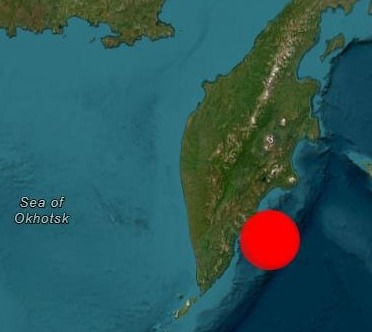
- On July 30, 2025, Russia’s remote Kamchatka Peninsula experienced two major geological events:
- An 8.8 magnitude earthquake struck off the Pacific coast
- This was followed by an eruption of the Klyuchevskoy volcano, the tallest active volcano in Europe and Asia
Volcanic Eruption Details:
- The Klyuchevskoy volcano, standing at 4,700 metres (15,000 feet), began erupting just hours after the earthquake.
Observations from the eruption:
- Lava flowed down the western slope
- The night sky was lit with a bright orange glow
- Explosions were accompanied by ash and molten rock discharge
- This dramatic eruption is part of the volcano’s frequent activity, with at least 18 eruptions recorded since 2000, according to the Smithsonian’s Global Volcanism Program.
Impact and Safety:
- Despite the intensity of the eruption, no casualties or major damage were reported.
- The surrounding region is sparsely populated
- The nearest major city, Petropavlovsk-Kamchatsky, is hundreds of kilometers away
- Russian authorities are closely monitoring both the volcano and seismic activity in the region
The Earthquake and Tsunami Alert:
- The 8.8 magnitude earthquake occurred earlier on July 30
- Tsunami warnings were issued across Kamchatka and even extended to Japan
- Coastal evacuations were carried out as a precaution
- 11 hours later, the warning was lifted after no major waves reached populated areas
About Kamchatka:
- The Kamchatka Peninsula lies within the Pacific Ring of Fire, a major zone of tectonic activity
- The region hosts over 300 volcanoes, around 29 are active
- It is one of the world’s most volcanically active areas
Conclusion:
- The Klyuchevskoy eruption, triggered soon after a powerful earthquake, showcases the volatile nature of Kamchatka’s geology.
- Although the event caused no major harm, it serves as a reminder of the immense natural forces that continue to shape the region.