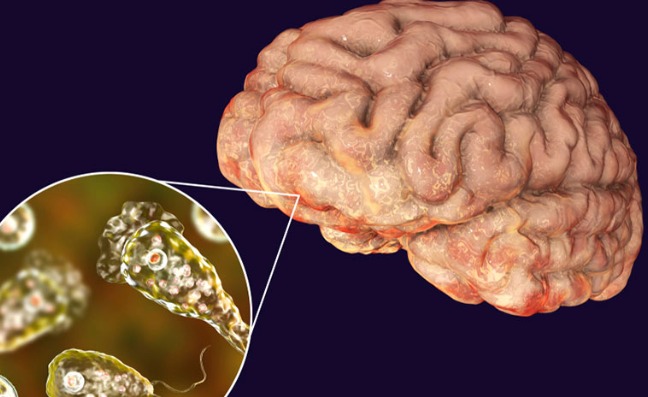
- The Kerala health department has issued an alert in Kozhikode district after three consecutive cases of the rare but deadly Primary Amoebic Meningoencephalitis (PAM) were reported. The infection, caused by the Naegleria fowleri amoeba, is often referred to as the “brain-eating amoeba” due to its destructive impact on brain tissues.
- PAM is an acute infection of the brain and its protective membranes. The amoeba is commonly found in warm freshwater bodies, hot springs, and inadequately maintained swimming pools.
- Infection occurs when contaminated water enters the body through the nose, after which the organism travels to the brain.
- The disease is extremely rare but highly fatal, with a mortality rate of over 95%, often proving fatal within days of onset. Symptoms include sore throat, severe headache, nausea, vomiting, fever, hallucinations, and disorientation.
- Naegleria fowleri is responsible for PAM, while other amoebic infections such as Granulomatous Amebic Encephalitis (GAE) are caused by species like Acanthamoeba and Balamuthia mandrillaris. Unlike GAE, which progresses slowly, PAM advances rapidly, making early detection critical.
- Health experts caution against swimming in stagnant or poorly maintained water bodies and emphasize strict water hygiene. While certain antibiotics may help in treatment, recovery remains extremely rare.
Limited-time offerGet up to 75% OFFGrab the offer
Kerala Reports Rare Cases of Brain-Eating Amoeba Infection
Three cases of Primary Amoebic Meningoencephalitis detected in Kozhikode district, health alert issued
Check your eligibility now