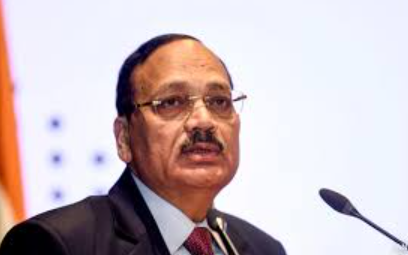
- Justice Surya Kant assumed office today as the 53rd Chief Justice of India, beginning a 14-month tenure focused on reducing case pendency and strengthening judicial efficiency. The oath was administered by President Droupadi Murmu following the recommendation of outgoing CJI Bhushan R. Gavai.
- न्यायमूर्ति सूर्यकांत ने आज भारत के 53वें मुख्य न्यायाधीश के रूप में पदभार ग्रहण किया। उनका 14-महीने का कार्यकाल न्यायालयों में लंबित मामलों को कम करने और न्यायिक दक्षता को मजबूत करने पर केंद्रित रहेगा। राष्ट्रपति द्रौपदी मुर्मू ने निवर्तमान CJI भूषण आर. गवई की सिफारिश पर उन्हें शपथ दिलाई।
- Born on 10 February 1962 in Haryana, Justice Surya Kant began his legal career in Hisar in 1984 before moving to Chandigarh. He handled constitutional, civil and service matters and represented major institutions including universities, corporations and the High Court. In 2000, he became Advocate General of Haryana and was designated Senior Advocate in 2001.
- 10 फ़रवरी 1962 को हरियाणा में जन्मे न्यायमूर्ति सूर्यकांत ने 1984 में हिसार से अपने कानूनी करियर की शुरुआत की और बाद में चंडीगढ़ चले गए। उन्होंने संवैधानिक, सिविल और सेवा मामलों पर काम किया और विश्वविद्यालयों, कॉरपोरेशनों तथा उच्च न्यायालय सहित कई प्रमुख संस्थानों का प्रतिनिधित्व किया। वर्ष 2000 में वे हरियाणा के महाधिवक्ता बने और 2001 में वरिष्ठ अधिवक्ता का दर्जा प्राप्त हुआ।
- Justice Surya Kant was appointed as a permanent judge of the Punjab & Haryana High Court in 2004, and in 2018, he became Chief Justice of the Himachal Pradesh High Court. He was elevated to the Supreme Court in May 2019. Since November 2024, he has served as Chairman of the Supreme Court Legal Services Committee, improving legal aid accessibility.
- न्यायमूर्ति सूर्यकांत को 2004 में पंजाब एवं हरियाणा उच्च न्यायालय का स्थायी न्यायाधीश नियुक्त किया गया और 2018 में वे हिमाचल प्रदेश उच्च न्यायालय के मुख्य न्यायाधीश बने। मई 2019 में वे सर्वोच्च न्यायालय के न्यायाधीश के रूप में पदोन्नत हुए। नवंबर 2024 से वे सुप्रीम कोर्ट लीगल सर्विसेज कमेटी के अध्यक्ष रहे, जहाँ उन्होंने विधिक सहायता की उपलब्धता को मजबूत किया।
- Upon assuming office, he identified reducing pendency — both in the Supreme Court and in courts across India — as his top priority. He announced plans to engage with High Courts to address issues affecting subordinate judiciary and also committed to forming five-judge, seven-judge and nine-judge Constitution Benches for long-pending constitutional matters.
- पदभार ग्रहण करते ही उन्होंने सर्वोच्च न्यायालय और देशभर के अन्य न्यायालयों में लंबित मामलों को कम करना अपनी सर्वोच्च प्राथमिकता बताया। उन्होंने अधीनस्थ न्यायपालिका से जुड़े मुद्दों पर सभी उच्च न्यायालयों के साथ संवाद बढ़ाने की योजना भी घोषित की। इसके अतिरिक्त उन्होंने लम्बे समय से लंबित संवैधानिक मामलों पर सुनवाई के लिए पाँच-न्यायाधीश, सात-न्यायाधीश और नौ-न्यायाधीश वाली संविधान पीठों के गठन की भी घोषणा की।
Limited-time offerGet up to 75% OFFGrab the offer
Justice Surya Kant Becomes India’s 53rd Chief Justice
Justice Surya Kant assumed office today as the 53rd Chief Justice of India, beginning a 14-month tenure focused on reducing case pendency and strengthening judi
Check your eligibility now