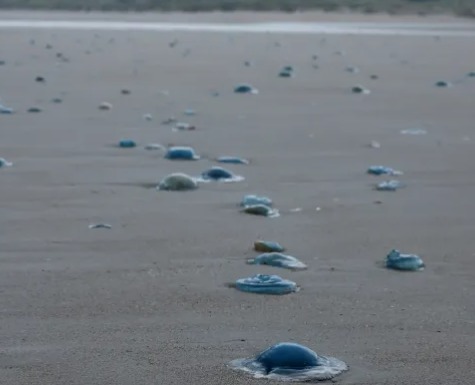
- One of France’s largest nuclear power plants was recently forced to temporarily shut down due to an unexpected natural threat — a swarm of jellyfish clogging its cooling systems.
- The incident has once again drawn global attention to the growing ecological impact of jellyfish blooms.
- Jellyfish are ancient, resilient marine organisms belonging to the phylum Cnidaria, which also includes corals and sea anemones. Despite lacking brains, hearts, or blood, jellyfish thrive with a simple anatomy consisting of three layers — the epidermis, mesoglea, and gastrodermis — and move using jet propulsion.
- Their stinging tentacles make them both fascinating and dangerous.
- Large jellyfish blooms disrupt marine ecosystems by reducing biodiversity, collapsing fish populations, and outcompeting native species.
- Scientists attribute the rise in jellyfish numbers to global warming, which increases ocean temperatures and boosts plankton populations (their primary food source).
- Overfishing of predators such as tuna and sea turtles, along with plastic pollution that jellyfish can tolerate, has further contributed to their unchecked growth.
- While jellyfish are a natural part of the ocean ecosystem, their growing frequency and scale present challenges not only for marine biodiversity but also for industries like fisheries and energy, as seen in the French case.
Limited-time offerGet up to 75% OFFGrab the offer
Jellyfish Swarm Forces Temporary Shutdown of French Nuclear Power Plant
Ancient marine creatures disrupt cooling systems, highlighting ecological and industrial challenges
Check your eligibility now