- Iran has carried out its first large-scale naval exercise since the June 2025 war with Israel, in a move aimed at restoring military credibility and asserting maritime power.
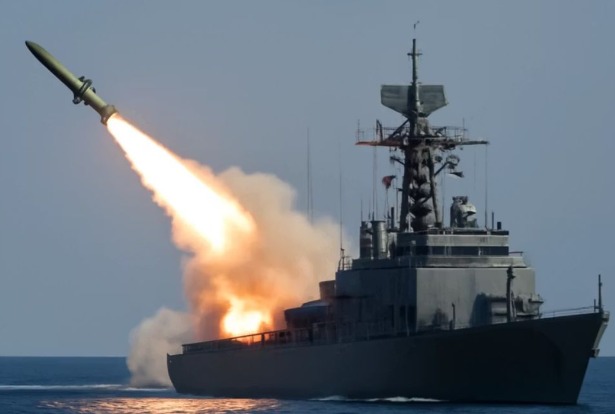
- The two-day drill, titled “Sustainable Power 1404,” was held in the Gulf of Oman and northern Indian Ocean, featuring missile launches, warship manoeuvres, and electronic warfare operations.
Context of the Drill:
- The exercise follows the 12-day Iran-Israel conflict in June 2025, during which Israel targeted Iranian air defences and nuclear sites, while Iran retaliated with missile strikes on Israeli cities and attempted attacks on a US base in Qatar.
- The drill serves as a signal of resilience and deterrence amid heightened regional tensions.
Objectives of Sustainable Power 1404:
- Boost combat readiness and naval command coordination.
- Demonstrate missile precision and long-range strike capability.
- Reinforce deterrence posture against Israel and Western forces.
Key Components:
- Participation of surface and subsurface warships, air units, missile defence systems, and electronic warfare brigades.
- Notable deployments included the frigate IRIS Sabalan and vessel IRIS Ganaveh, which launched Nasir and Qadir cruise missiles at sea targets.
- Integrated operations reflected Iran’s push towards modernized, multi-domain warfare.
Geopolitical Implications:
- The exercise is seen as a direct counter to Israeli military drills simulating strikes on Iran’s nuclear facilities.
- It signals Tehran’s intent to maintain influence in the Gulf of Oman and Indian Ocean, critical maritime corridors for global trade and energy.
Military Significance:
- Beyond external signalling, the drill aims to boost morale within Iran’s armed forces and reassure domestic audiences of military recovery after recent setbacks.
- The scale and coordination suggest Iran’s focus on enhancing integrated naval and air capabilities, which could reshape regional security dynamics.