Why in News?
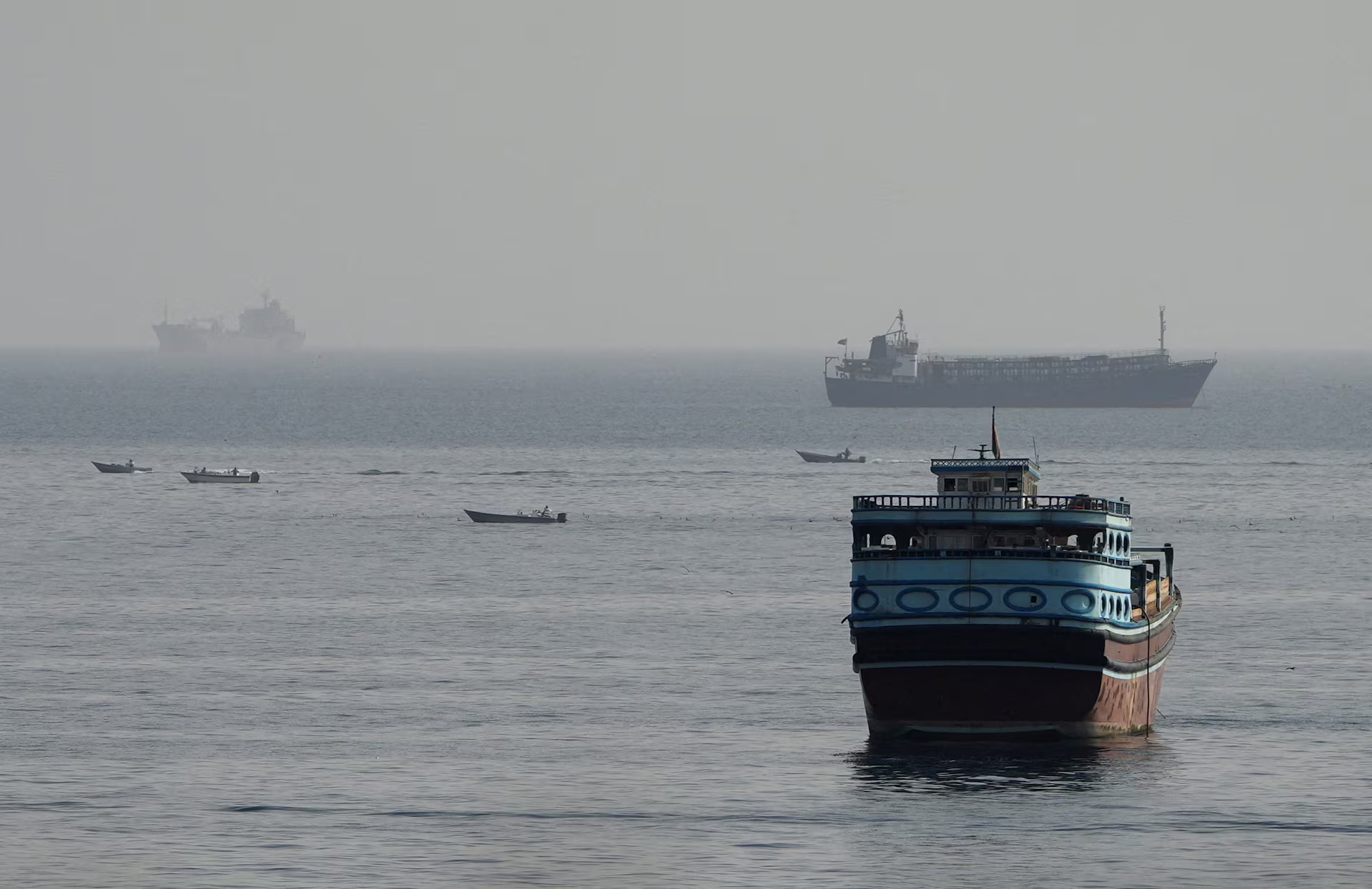
Iran and Oman have reached a technical agreement on a shipping route map for the Strait of Hormuz after months of negotiations. The arrangement is aimed at improving the safety and movement of commercial vessels through the strategically important waterway.
Key Highlights
- The agreement was reached after around three months of technical discussions between Iran and Oman.
- The talks began under a June 18 memorandum of understanding linked to the broader Iran-US framework. Under the agreement, Iran and Oman were asked to work together on a new navigation route through the Strait of Hormuz.
- The talks focused on establishing safe navigation routes through the Strait of Hormuz.
- Iranian Foreign Ministry spokesman Esmaeil Baghaei said the agreement was the result of coordination among Iran’s foreign, defence, security and environmental authorities.
- Iran and Oman are still discussing some remaining issues, and a joint statement is expected after the process is completed.
- The arrangement is intended to respect the sovereignty of both Iran and Oman while providing a framework for maritime traffic.
- Iran has said that the full restoration of normal commercial shipping also depends on an end to what it describes as US military threats and a naval blockade.
About the Strait of Hormuz
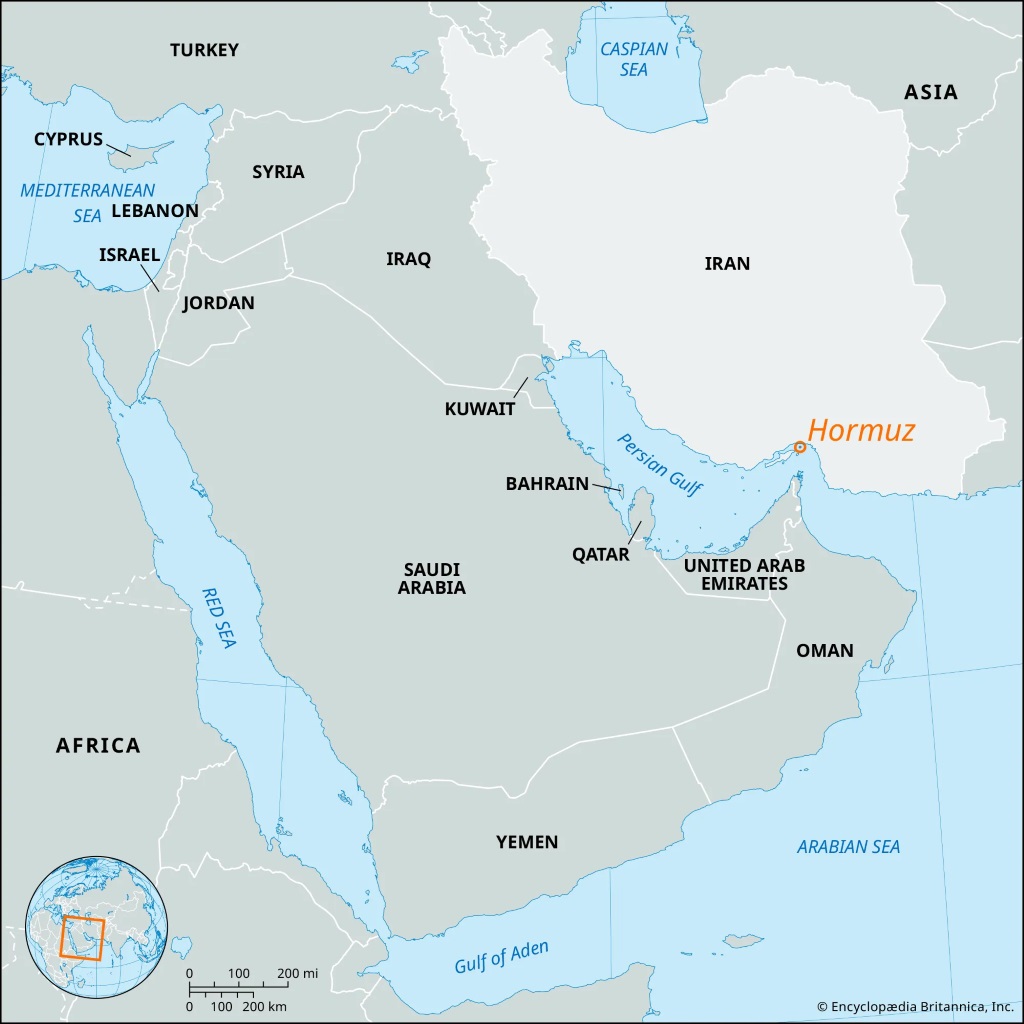
- The Strait of Hormuz is a narrow waterway between Iran and the Arabian Peninsula, with the UAE and Oman on its southern side.
- It connects the Persian Gulf with the Gulf of Oman and the Arabian Sea.
- Iran lies to the north, while the UAE and Oman are located to the south.
- At its narrowest point, the strait is about 21 nautical miles (33 km) wide..
- Important islands in and around the strait include Hormuz, Qeshm and Hengam.
Significance
- The Strait of Hormuz is one of the world's most important energy trade routes and maritime chokepoints.
- A large share of the world's oil and liquefied natural gas (LNG) shipments passes through it.
- It is a major route for oil and gas exports from countries such as Saudi Arabia, Kuwait, Iraq, Qatar, Bahrain, the UAE and Iran.
- Most of these energy supplies are transported to Asian markets, including China.