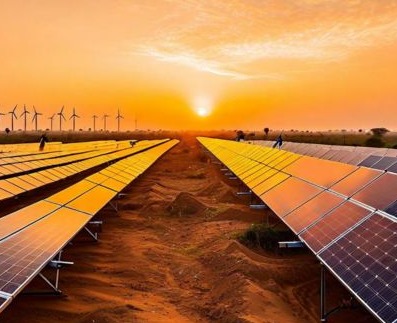
- India’s clean energy ambitions have received a powerful push with the release of the Updated Solar PV Potential Assessment Report and the launch of the first Solar Cell and Module Manufacturing Training Programme at the National Institute of Solar Energy (NISE), Gurugram.
- These twin initiatives reflect the country’s determination to meet its target of 500 GW non-fossil fuel capacity by 2030 and achieve energy independence by 2047.
- The updated report reveals that India’s solar power potential is far greater than earlier assumed. Using high-resolution GIS, satellite data, and advanced land-use models, NISE has estimated a feasible capacity of about 3,343 GWp, a sharp rise from the 2014 figure of 749 GWp.
- This assessment underscores that opportunities are not limited to the deserts of Rajasthan and Gujarat but extend to multiple states with favourable irradiance (3.5–5.5 kWh/m²/day) and available land.
- By factoring in shading, spacing, and proximity to infrastructure, the report provides a practical, investment-ready roadmap for policymakers and developers.
Limited-time offerGet up to 75% OFFGrab the offer
India Unlocks 3,343 GW Solar Potential, Boosts Manufacturing and Training Initiatives
MNRE report highlights massive solar capacity, while new training programme supports self-reliance in clean energy technology I
Check your eligibility now