Why in News?
India has crossed 300 GW of installed electricity generation capacity from non-fossil fuel sources as of 31 July 2026. This achievement is taking the country past 60% of its target of 500 GW by 2030.
Importance
- Marks steady progress towards India's 2030 non-fossil fuel capacity target.
- This shows that there is an increase in the use of renewable and other clean resources in India.
- This helps to secure India's future energy needs while also allowing the country to lessen its reliance on fossil fuels.
- India can now further develop their economy through their investments into clean energy.
Key Points
- India's non-fossil fuel-based installed capacity has crossed 300 GW.
- The country aims to reach 500 GW of non-fossil fuel-based capacity by 2030.
- More than 54% of India's total installed electricity capacity now comes from non-fossil fuel sources.
- Solar energy is the largest contributor, with around 165 GW of installed capacity.
- India added a record 55.29 GW of non-fossil fuel-based capacity in 2025–26.
- Renewable energy generation increased from around 191 billion units in 2014–15 to more than 477 billion units in 2025–26.
About Non-Fossil Fuel Energy
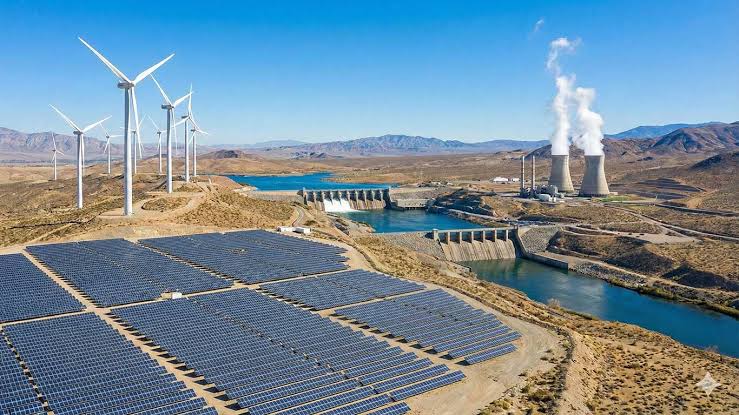
Non-fossil fuel energy refers to electricity generated without using conventional fossil fuels such as coal, petroleum and natural gas.
In India, the major sources include:
- Solar energy
- Wind energy
- Hydropower
- Nuclear energy
- Other renewable energy sources
Among these, solar power has emerged as a major driver of capacity addition.
India's 2030 Target
India aims to achieve 500 GW of installed electricity generation capacity from non-fossil fuel sources by 2030. The expansion of clean energy capacity is an important part of India's broader energy transition. It is intended to reduce the dependence on fossil fuels while meeting the country's growing energy requirements and supporting its climate commitments.