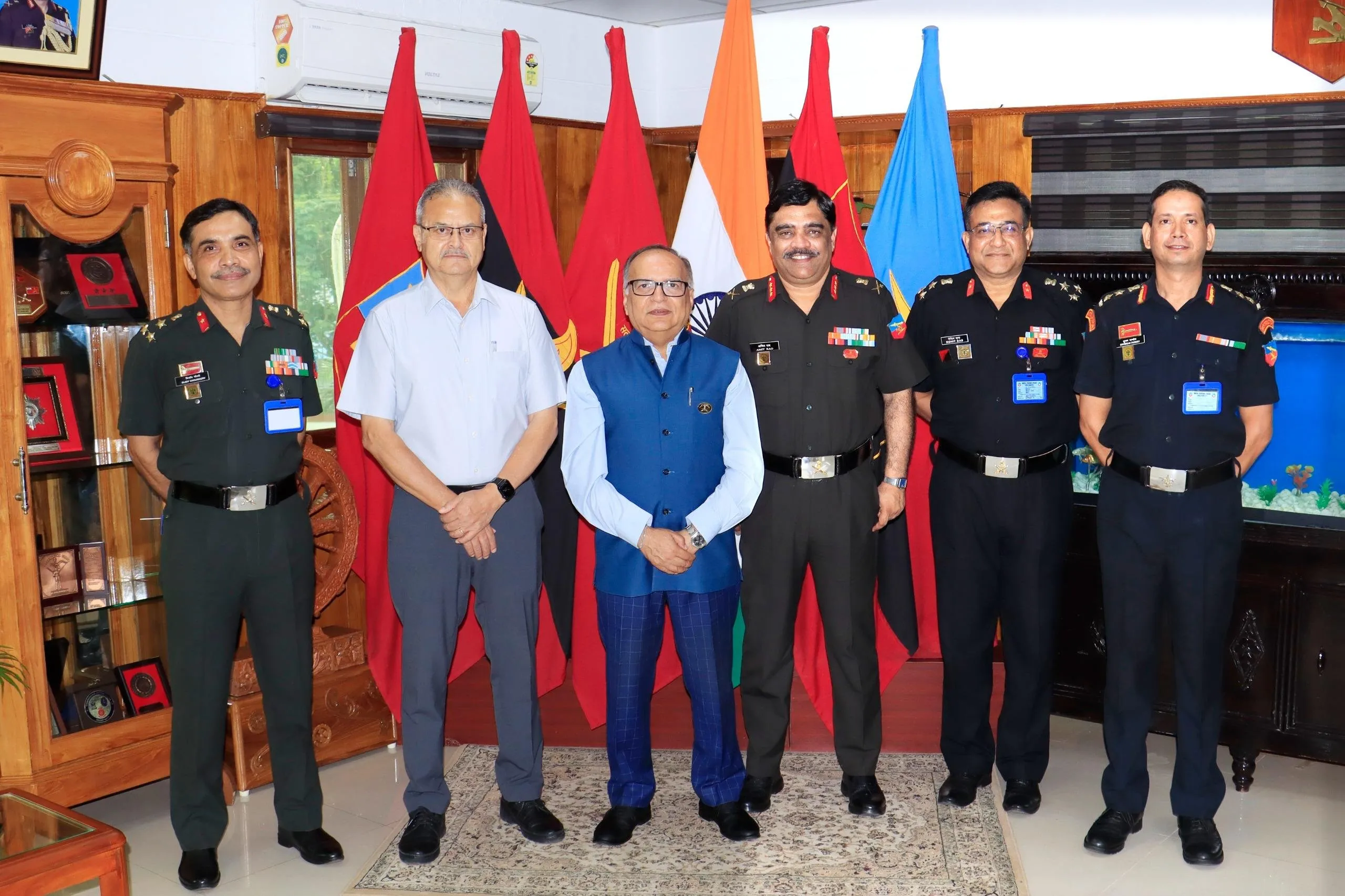
- India and Australia signed a landmark agreement for a three-year joint research project on undersea surveillance.
- This collaboration involves the Defence Science and Technology Group (DSTG) from Australia and DRDO’s Naval Physical and Oceanographic Laboratory (NPOL) in Kochi, India.
Project Aim:
- The project seeks to strengthen undersea surveillance, emphasizing early detection and tracking of submarines and Autonomous Underwater Vehicles (AUVs).
- It includes sharing algorithms, conducting sea trials in Indian and Australian waters, and validating algorithms for real-world applications.
Key Focus Areas of the Project:
i. Towed Array Target Motion Analysis (TMA):
- Towed Arrays are long underwater cables equipped with hydrophones that collect acoustic signals from various directions to detect underwater activity.
- Signal Processing converts data from hydrophones into actionable intelligence using advanced filtering and analysis techniques.
ii. TMA Algorithms:
- Uses passive tracking to estimate target location, speed, and path without emitting sonar signals.
- Enhances situational awareness, especially in stealth and low-visibility operations.
iii. Noise Management:
- Integrates TMA with towed array systems to minimize signal distortion caused by marine noise.
- Improves accuracy in detecting and tracking submerged objects.