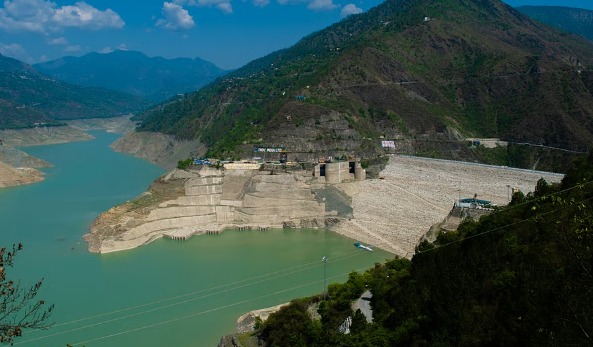
- A new report by the International Centre for Integrated Mountain Development (ICIMOD), released during the Asia-Pacific Clean Energy Week 2025 in Bangkok, has revealed that the Hindu Kush Himalaya (HKH) region is tapping only a fraction of its renewable energy resources.
- Covering eight countries—Afghanistan, Bangladesh, Bhutan, China, India, Myanmar, Nepal, and Pakistan—the region has vast potential in hydropower, solar, and wind energy.
- Currently, renewable energy makes up just 6.1% of the region’s primary energy supply. Hydropower is the dominant source, with an estimated 882 GW potential, but only 49% has been harnessed, much of it from trans-boundary rivers. Non-hydro renewables such as solar and wind have a combined potential of 3 Terawatts (TW), though national targets across HKH countries add up to only 1.7 TW—less than half the available capacity.
- While Bhutan and Nepal generate nearly all their electricity from hydropower, other HKH countries remain heavily dependent on fossil fuels—98% in Bangladesh, 77% in India, 76% in Pakistan, 67% in China, and 51% in Myanmar. Rural communities in Nepal and Myanmar also rely on traditional biomass, worsening indoor air pollution and health risks.
- The report warns that climate change threatens energy infrastructure, with water variability, glacial lake outburst floods, and extreme weather affecting nearly two-thirds of hydropower projects.
- It stresses the need for disaster risk reduction and diversification beyond large dams, advocating for solar, wind, and water-efficient innovations to ensure energy and water security.
- Barriers to renewable energy growth include high capital costs, lack of private investment, limited technical expertise, and concerns over social and environmental impacts.
- The report calls for stronger policies, regulations, and research investments to unlock the region’s clean energy potential and advance sustainable development.
Limited-time offerGet up to 75% OFFGrab the offer
ICIMOD Report Highlights Untapped Renewable Energy Potential in Hindu Kush Himalaya
Region holds over 3 TW of clean energy capacity but faces climate risks and investment challenges
Check your eligibility now