Musi River: Latest Developments and Background:
- The Hyderabad Disaster Response and Asset Protection Agency (HYDRAA) has launched a crackdown on illegal encroachments along the Musi River bed.
- This action follows increasing concerns over urban sprawl, environmental degradation, and flood risks caused by unchecked construction within the river's natural course.
- The agency is taking legal and operational measures to remove unauthorized structures and prevent further damage to the river’s ecological and hydrological systems.
About the Musi River:
- The Musi River is also known as Muchukunda or Musunuru River.
- Geographical Importance
- It is a significant tributary of the Krishna River, flowing through the Deccan Plateau region of Telangana, India.
- The Musi is an important urban river, historically dividing the Old City and New City of Hyderabad.
Origin and Course:
- Source: The river originates in the Anantagiri Hills near Vikarabad, Telangana.
- It is formed by the merging of two smaller streams: Esi (8 kilometers long) and Musa (13 kilometers long).
- The Musi flows eastward, passing through Hyderabad, Rangareddy, and Nalgonda districts.
- Confluence: It ultimately joins the Krishna River near Wazirabad in Nalgonda district.
- Total length: Approximately 240 kilometers.
Infrastructure and Water Management:
- Dams: Two major reservoirs, Himayat Sagar and Osman Sagar, are constructed on the river. These dams historically supplied drinking water to Hyderabad and helped control flooding.
- Diversion Weirs: There are 24 irrigation weirs, known locally as kathwas, built across the river to support agricultural activities downstream.
Environmental Issues:
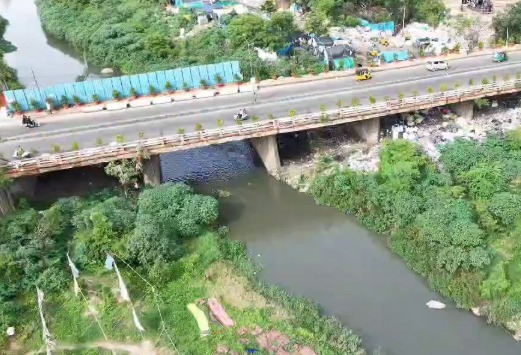
- The Musi River has become heavily polluted, especially within the urban limits of Hyderabad.
- It receives large volumes of untreated sewage, industrial waste, and solid debris, severely affecting water quality, aquatic life, and public health.
- Despite its historical and ecological importance, the river is severely degraded, with encroachments narrowing its natural flow path and increasing flood vulnerability during heavy rains.
Significance of Recent Action:
- HYDRAA’s move is part of a broader campaign to rejuvenate the Musi River, reclaim its natural course, and prevent future urban flooding and landslides.
- Removal of illegal structures is crucial for restoring hydraulic flow, improving groundwater recharge, and enabling the implementation of planned riverfront development projects.
- The initiative also aligns with larger goals of urban ecological restoration and sustainable development in Telangana.
Conclusion:
- The Musi River is both a vital natural resource and a victim of rapid urbanization.
- The recent crackdown by HYDRAA marks a turning point in the efforts to preserve and restore the river’s ecological integrity.
- Long-term success will depend on continuous enforcement, sustainable urban planning, and active community involvement in conservation efforts.