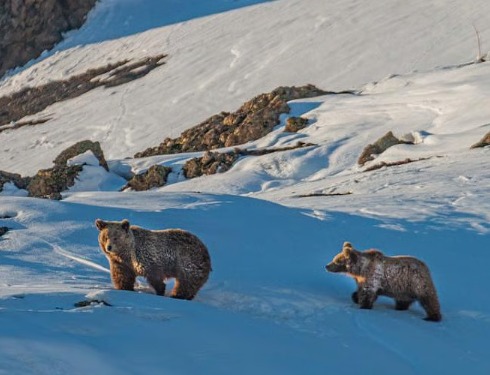
- The Himalayan brown bear (Ursus arctos isabellinus), one of the least studied bear subspecies, is increasingly under threat due to habitat loss, climate change, and expanding human activity in the Himalayas.
- The issue drew attention after a recent attack on Pakistani singer Quratulain Balouch in Deosai National Park, Gilgit-Baltistan, underscoring rising cases of human-bear conflict in the region.
- Found in the alpine and sub-alpine zones of the north-western and western Himalayas, the Himalayan brown bear is a top predator and key ecological indicator. Its population, already in decline, is suffering from habitat fragmentation caused by deforestation, land use changes, and human settlement expansion.
- Traditionally preferring areas of low human density, the species is being pushed closer to human settlements in search of food and space.
- Climate change is further intensifying these challenges. The Himalayan region is warming faster than the global average, with temperatures projected to rise by up to 3°C by 2100. This alters snowfall patterns, shortens winters, and extends the foraging season, often driving bears to scavenge in villages or near tourist areas. Such shifts increase both ecological stress and the risk of human-wildlife conflict.
- Conservationists warn that without urgent measures—such as habitat protection, waste management near settlements, and stricter regulation of human activities in sensitive zones—the Himalayan brown bear could face an accelerated population decline, impacting not only the species but also the fragile mountain ecosystem it helps regulate.
Limited-time offerGet up to 75% OFFGrab the offer
Himalayan Brown Bear Faces Rising Threats Amid Climate Change and Human Encroachment
Recent attack in Deosai highlights growing human-bear conflicts in the Himalayan region
Check your eligibility now