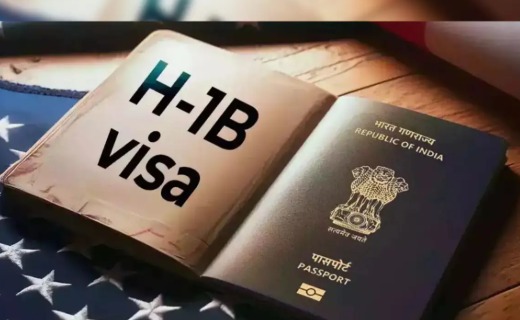
- The White House has introduced a controversial $100,000 entry fee for new H-1B visa applicants effective September 21, 2025.
- The surcharge applies to workers outside the U.S. seeking consular stamping, while extensions and status changes for those already in the country are exempt.
- The measure, valid for 12 months, will be reviewed before possible extension. The Secretary of Homeland Security may waive the fee for certain individuals,
- companies, or industries deemed vital to U.S. national interest, though details on exemptions remain unclear. Sectors such as healthcare, defence, and critical technology are expected to be prioritized, but the order does not explicitly address universities and non-profits, which are usually cap-exempt.
- The impact on India is expected to be severe. Indian nationals accounted for 71% of H-1B approvals in FY2024, and most petitions fall below the $100,000 salary mark, making the additional fee prohibitive.
- The rule disrupts the popular OPT-to-H-1B pathway for young Indian graduates and complicates staff rotations for IT service giants like TCS, Infosys, and Wipro, who rely heavily on onsite delivery models. Global Capability Centres may now accelerate offshoring to Indian hubs such as Bengaluru, Hyderabad, and Pune.
- Industries most affected include Big Tech, cloud firms, IT services, consulting, finance, and research institutions. While critics argue H-1Bs depress U.S. wages, industry leaders maintain they are essential to address America’s STEM skills gap.
- The new fee adds another layer to the long-running U.S. immigration debate, where politics, economics, and nationalism continue to collide.
Limited-time offerGet up to 75% OFFGrab the offer
H-1B $100,000 Entry Fee: Impact, Exemptions, and Industry Challenges
India Faces the Harshest Blow as U.S. Reshapes Skilled Migration
Check your eligibility now