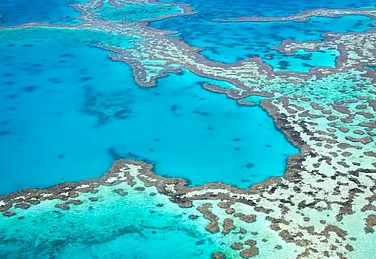
- The Great Barrier Reef has experienced its sharpest drop in hard coral cover in almost four decades, according to recent findings.
- Scientists warn that climate change-induced heat stress, cyclones, and outbreaks of coral-eating crown-of-thorns starfish are pushing the ecosystem to the brink.
- Located in the Coral Sea off the northeastern coast of Australia, the Great Barrier Reef is the world’s longest and largest reef complex, stretching over 2,000 km and covering about 350,000 sq. km—around 10% of the world’s coral reef ecosystems.
- It consists of approximately 2,100 individual reefs and 800 fringing reefs, and is home to 400 coral species, 1,500 fish species, and 4,000 mollusc species.
- The reef supports six of the seven known sea turtle species, more than a dozen sea snakes, and nearly two dozen bird species, including endangered creatures like the dugong and large green turtle.
- Recognized as a UNESCO World Heritage Site in 1981, much of the reef is a protected marine area under the Great Barrier Reef Marine Park Authority.
Limited-time offerGet up to 75% OFFGrab the offer
Great Barrier Reef Records Steepest Coral Decline in Nearly 40 Years
Climate change, cyclones, and coral-eating starfish threaten world’s largest reef system
Check your eligibility now