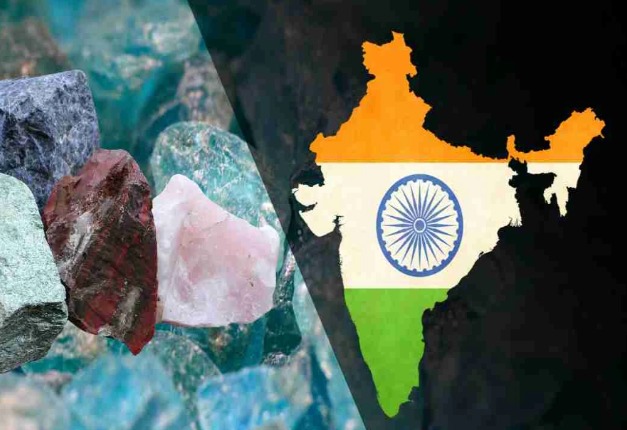
- The Union Cabinet has approved a ₹1,500 crore Incentive Scheme under the National Critical Mineral Mission (NCMM) to strengthen India’s critical mineral recycling ecosystem.
- The scheme, spanning from FY 2025-26 to FY 2030-31, is designed to support the recovery of valuable minerals from e-waste, lithium-ion battery (LIB) scrap, and other secondary sources.
- The scheme provides 20% Capex subsidy along with Opex incentives on incremental sales, capped at ₹50 crore for large entities and ₹25 crore for small entities.
- By incentivizing both new and existing recyclers, including start-ups, the initiative aims to establish a 270 kiloton recycling capacity, generate 40 kilotons of critical minerals annually, attract nearly ₹8,000 crore of private investment, and create about 70,000 jobs.
- This move marks a significant step towards securing India’s supply of critical minerals essential for sectors such as electric mobility, renewable energy, electronics, and defence, while also addressing the growing challenge of electronic waste.
- The scheme aligns with India’s broader goals of resource security, sustainability, and Aatmanirbhar Bharat.
Key Takeaways for Exam:
- Scheme: ₹1,500 crore Incentive Scheme under National Critical Mineral Mission (NCMM)
- Duration: FY 2025-26 to FY 2030-31
- Focus: Recycling from e-waste, LIB scrap, secondary sources
- Incentives: 20% Capex subsidy + Opex incentives (₹50 crore cap for large entities, ₹25 crore for small)
- Targets: 270 kiloton recycling capacity, 40 kiloton critical minerals annually
- Impact: ₹8,000 crore investment, 70,000 jobs