Why in News
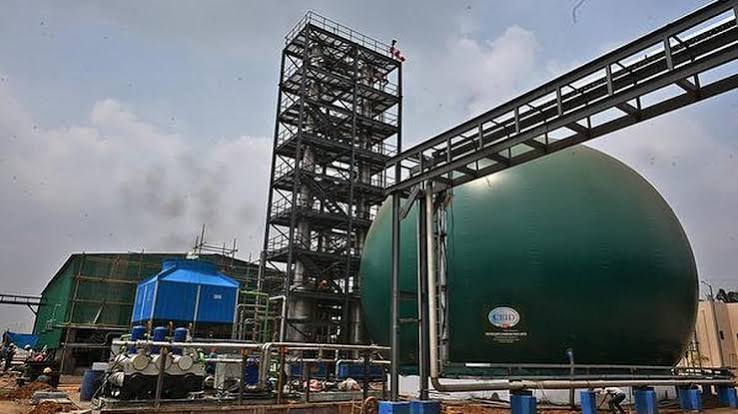
- The Union Cabinet has approved GOBARdhan – the National Circular Bioenergy Scheme with a total outlay of ₹23,731 crore. The scheme will be implemented from FY 2026–27 to FY 2035–36 to accelerate Compressed Biogas (CBG) production in India.
Importance
- It increases the domestic supply of renewable gaseous fuel and reduces dependence on imported fossil fuels.
- It converts agricultural residue, cattle dung and organic municipal waste into valuable fuel and manure.
- It creates income and employment opportunities for farmers, rural entrepreneurs, cooperatives and feedstock aggregators.
- It develops local value chains around biomass collection, transportation, CBG production and organic manure.
Key Highlights
- Total Outlay: ₹23,731 crore
- Implementation Period: FY 2026–27 to FY 2035–36
- Target: Nearly 10-fold increase in domestic CBG production
- CBG Offtake Obligation: 3% in FY 2026–27, 4% in FY 2027–28 and 5% from FY 2028–29 onwards for CNG (Transport) and PNG (Domestic).
- Stable CBG Price: ₹2,110/MMBTU with a minimum 10-year framework.
- Capital Assistance: Up to ₹2 crore per TPD of installed CBG capacity for eligible projects.
- Pipeline Support: Connectivity between CBG plants, trunk pipelines and City Gas Distribution networks.
- Credit Guarantee: Support for eligible MSME-based CBG projects to improve access to institutional finance.
- Ecosystem Challenge Fund: Supports feedstock mapping, aggregation, technology adoption, district-level planning and organic-manure value addition.
- Existing Foundation: More than 200 CBG plants have already been commissioned through earlier government initiatives.
Static Fact
GOBARdhan's push to boost domestic CBG production is strategically significant given India's heavy reliance on the Strait of Hormuz for energy imports; roughly half of India's LNG imports and a large share of its crude oil and LPG pass through this narrow chokepoint.
About GOBARdhan
- The scheme will be administered by the Ministry of Petroleum and Natural Gas.
- It seeks to convert agricultural residue, cattle dung, press mud, municipal organic waste and other biomass into clean fuel, organic manure and economic value.
- It will provide an integrated framework covering the entire CBG value chain, from feedstock aggregation to production, transportation and offtake.
- The scheme builds upon existing initiatives such as SATAT, Market Development Assistance (MDA), Biomass Aggregation Machinery (BAM), Development of Pipeline Infrastructure (DPI) and Central Financial Assistance (CFA) under the National Bioenergy Programme.