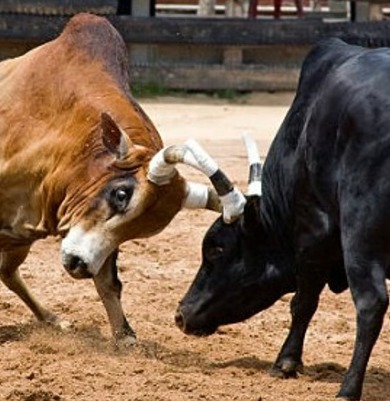
- In a recent session of the Goa Legislative Assembly, lawmakers across party lines urged the legalisation of Dhirio — the state’s traditional form of bull fighting.
- Locally known as dhirio or dhiri, the sport is deeply embedded in Goa’s cultural heritage and has been practiced for generations, tracing its roots back to the Portuguese era.
- Traditionally held after the harvest season, dhirios are organised in paddy fields and football grounds, often as a highlight of Church festivals.
- Village shepherds bring their bulls to compete, drawing large crowds from surrounding areas.
- The contest begins with two bulls charging at each other, locking horns, and engaging in repeated head-butting, with trainers positioned behind to provoke and direct them.
- Despite its cultural significance, the sport was banned following a 1997 High Court directive, which ordered the state to prohibit “all types of animal fights, including bull fights and dhirios.” The current call for revival has reopened debates on balancing heritage preservation with animal welfare laws.
Limited-time offerGet up to 75% OFFGrab the offer
Goa Legislators Demand Legalisation of Traditional Dhirio Bull Fighting
Debate Rekindles Over Reviving a Centuries-Old Post-Harvest Cultural Sport
Check your eligibility now