
Washington, D.C.:
- The Department of Health and Human Services (HHS) has confirmed the first human case of New World screwworm infestation in the United States.
- The parasite, known for its flesh-eating nature, typically affects warm-blooded animals but can, in rare cases, infect humans.
About New World Screwworm:
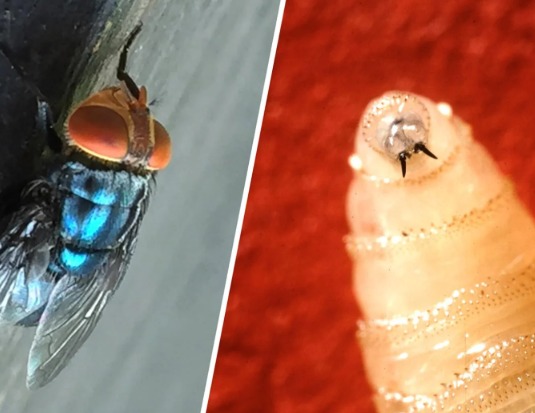
- Type: A blue-grey blowfly native to South America and the Caribbean.
- Name Origin: Derived from the screw-like burrowing pattern of the larvae in living tissue.
Reproduction:
- Female flies lay eggs on open wounds or body cavities.
- Each female can lay up to 300 eggs at once and 3,000 eggs during her 10–30 day lifespan.
- Eggs hatch into larvae (maggots) that burrow into flesh, feeding on living tissue.
- Life Cycle: After feeding, larvae drop to the ground, burrow into soil, and emerge as adult screwworm flies.
Symptoms of Infestation in Humans:
- Non-healing wounds or sores
- Bleeding from open sores
- Sensation of larvae movement inside wounds
- Foul-smelling discharge from the infected site
- Can lead to severe pain and high mortality if untreated
Significance:
- The detection of this case in the United States is alarming since the parasite has been largely controlled in North and Central America through eradication programs.
- Experts warn that early detection and medical intervention are critical to prevent fatal outcomes in human cases.