
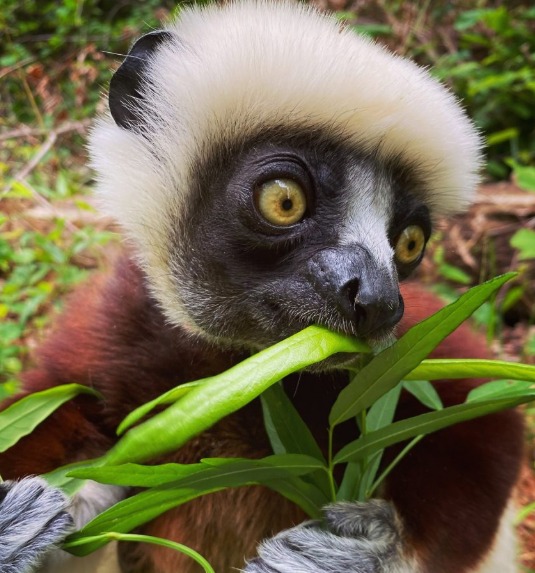
Latest Update:
- For the first time, a joint research team has successfully identified the composition of the intestinal microbiome of the Indri Lemur (Indri indri)—a significant breakthrough in understanding the biology and conservation needs of this critically endangered species.
About Indri Lemur:
- Local Name: Babakoto
- Scientific Name: Indri indri
- Conservation Status: Critically Endangered (IUCN Red List)
Habitat and Distribution:
- Geographic Range: Found only in northeastern Madagascar
- Habitat: Inhabits coastal and montane rainforests ranging from sea level up to 1,800 meters
Physical Features:
- Size: 60–70 cm (24–28 inches) in length
- Tail: Rudimentary
Distinctive Traits:
- Large hands and feet
- Round head with a pointed face and furry, round ears
- Smooth, silky fur: Typically black with white patches on the head, throat, forearms, and buttocks
- Colour patterns vary geographically
Behaviour and Diet:
- Activity: Diurnal (active during the day)
- Lifestyle: Strictly arboreal (tree-dwelling), climbs in an upright posture
- Diet: Primarily feeds on leaves, fruits, flowers, and other vegetation
Lifespan in the Wild:
- Approximately 15 to 18 years
Significance of the Study:
- This pioneering study on the indri’s gut microbiome is vital for advancing species-specific conservation strategies, especially for captive breeding and health monitoring, since indris do not survive in captivity and face ongoing habitat loss in the wild.