Why is it in the news?
→ Supreme Court reserved judgment in Harish Rana vs Union of India (2025) seeking passive euthanasia.
→ Case has revived debate on the right to die with dignity under Article 21.
Category: Polity
Important Points
- Petitioner bedridden for over 13 years with 100% quadriplegic disability after severe head injury.
- Active euthanasia is illegal; passive euthanasia permitted under strict Supreme Court guidelines.
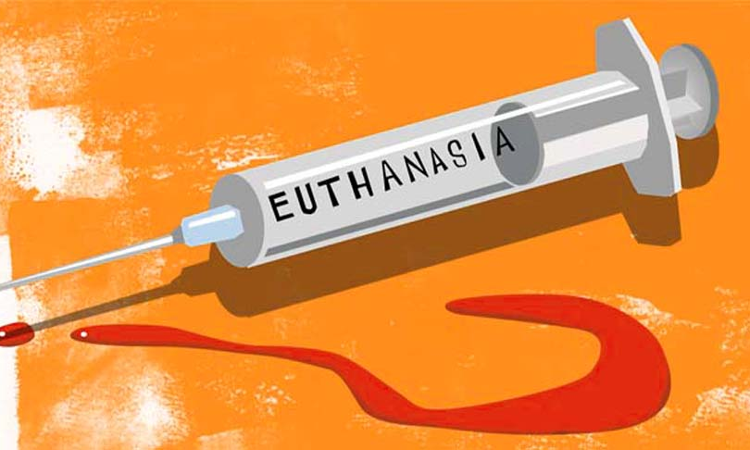
- Euthanasia defined as intentional hastening of death to relieve unbearable suffering.
- Types: Active and Passive; further classified into Voluntary, Non-voluntary, and Involuntary.
- Bharatiya Nyaya Sanhita (BNS), 2023: Sections 100 (culpable homicide), 101 (murder), 108 (abetment of suicide).
- Law Commission 241st Report (2012): refusal of life-sustaining treatment by competent patients is legally valid.
- Key judgments:
- Gian Kaur (1996) – right to life does not include the right to die.
- Aruna Shanbaug (2011) – passive euthanasia allowed with safeguards.
- Common Cause (2018) – right to die with dignity recognised; living wills permitted.
- Two-board process: Primary Medical Board + Secondary Medical Board.
- 2023 SC simplification: specialist experience reduced from 20 years to 5; 48-hour deadline; both boards now have 3 members each.
- Primary Board includes treating head + specialists; Secondary Board constituted by District administration.
- Global context mentioned: Netherlands, Belgium, Luxembourg, Spain, Quebec, parts of Australia permit euthanasia/assisted suicide; Switzerland allows assisted suicide; Sweden/France allow passive euthanasia; Italy allows refusal of treatment.
- Emphasis on safeguards, palliative care, and legislative clarity.