Latest Update:
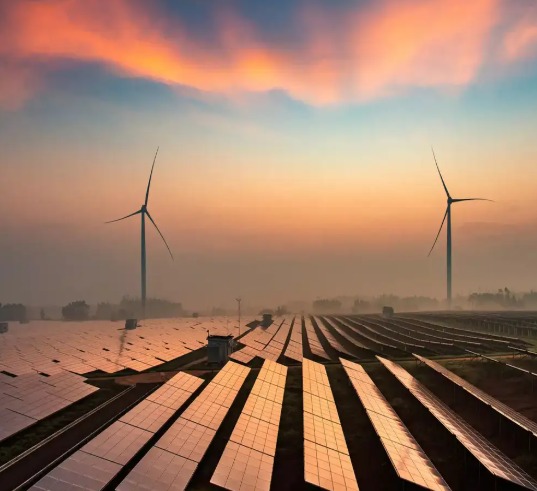
- According to Crisil Ratings, around 26 gigawatt (GW) of renewable energy (RE) capacity — mostly solar and wind projects — may be affected due to the end of the waiver on Inter-State Transmission System (ISTS) charges.
- The waiver, which previously allowed free transmission of renewable energy across states, has expired, raising cost concerns for developers.
About Inter State Transmission System (ISTS):
- Purpose:
- A high-voltage transmission network enabling electricity flow across state borders in India.
- Balances power supply between energy-rich and energy-deficient regions.
Managed by:
- Central Transmission Utility of India Ltd (CTUIL)
- A wholly-owned subsidiary of Power Grid Corporation of India Ltd (POWERGRID) under the Ministry of Power
Voltage Range:
- Operates at 132 kV and above
- Minimizes transmission losses and improves grid stability
Role in Renewable Energy:
- Facilitates large-scale transmission of solar and wind power
- Key enabler for pan-India renewable energy distribution
Key Benefits of ISTS:
- Eliminates state-wise power flow restrictions
- Creates a unified national electricity market
- Helps overcome geographical limitations
- Ensures efficient energy allocation based on demand
How ISTS Works:
- Power Generation: From solar, wind, hydro, and thermal sources
- Grid Connection: Power sent to ISTS high-voltage substations managed by CTU
- Transmission: Electricity transmitted via 132 kV+ lines across states
- Load Regulation: Monitored by RLDCs and NLDC to ensure demand-supply balance
- Local Distribution: Stepped down and supplied via State Transmission Utilities (STUs) to consumers