Why in News?
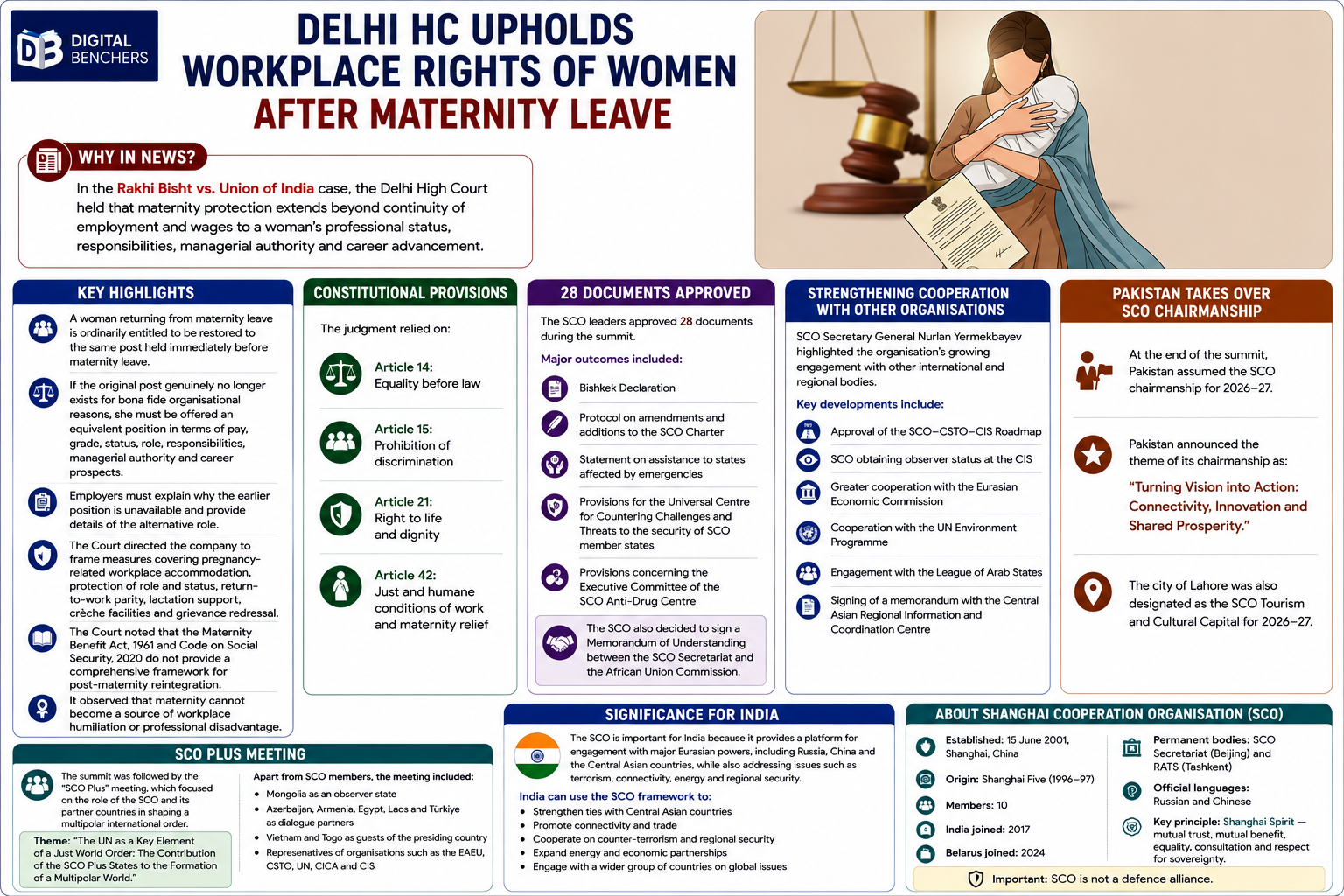
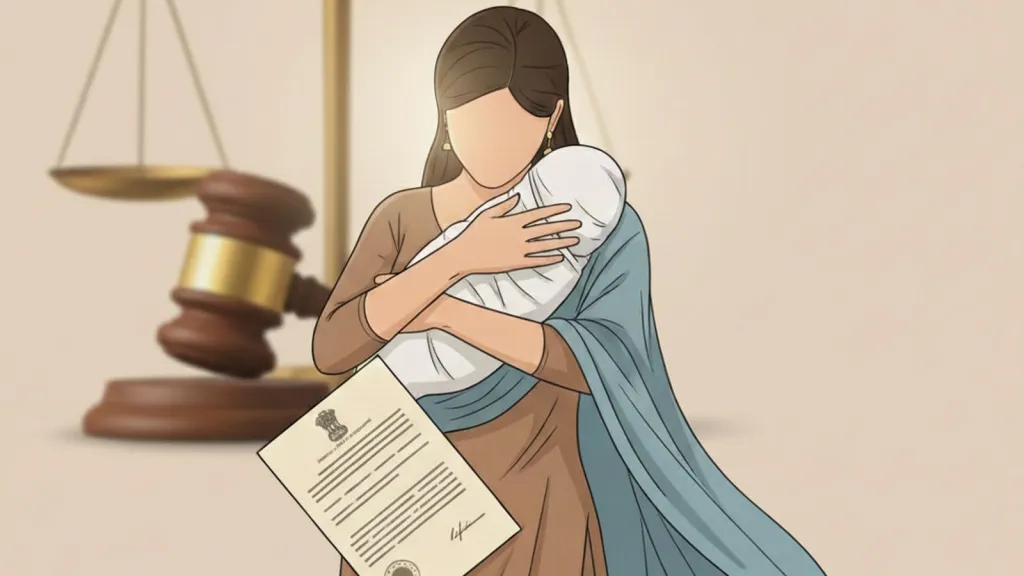
In the Rakhi Bisht vs. Union of India case, the Delhi High Court held that maternity protection extends beyond continuity of employment and wages to a woman’s professional status, responsibilities, managerial authority and career advancement.
Key Highlights
- A woman returning from maternity leave is ordinarily entitled to be restored to the same post held immediately before maternity leave.
- If the original post genuinely no longer exists for bona fide organisational reasons, she must be offered an equivalent position in terms of pay, grade, status, role, responsibilities, managerial authority and career prospects.
- Employers must explain why the earlier position is unavailable and provide details of the alternative role.
- The Court directed the company to frame measures covering pregnancy-related workplace accommodation, protection of role and status, return-to-work parity, lactation support, crèche facilities and grievance redressal.
- The Court noted that the Maternity Benefit Act, 1961 and Code on Social Security, 2020 do not provide a comprehensive framework for post-maternity reintegration.
- It observed that maternity cannot become a source of workplace humiliation or professional disadvantage.
Constitutional Provisions
The judgment relied on:
- Article 14: Equality before law
- Article 15: Prohibition of discrimination
- Article 21: Right to life and dignity
- Article 42: Just and humane conditions of work and maternity relief
Significance
The judgment reinforces that maternity leave cannot be used as a basis for demotion, loss of professional status or denial of career progression. It also highlights the need for stronger workplace mechanisms to ensure the effective reintegration of women after maternity leave.