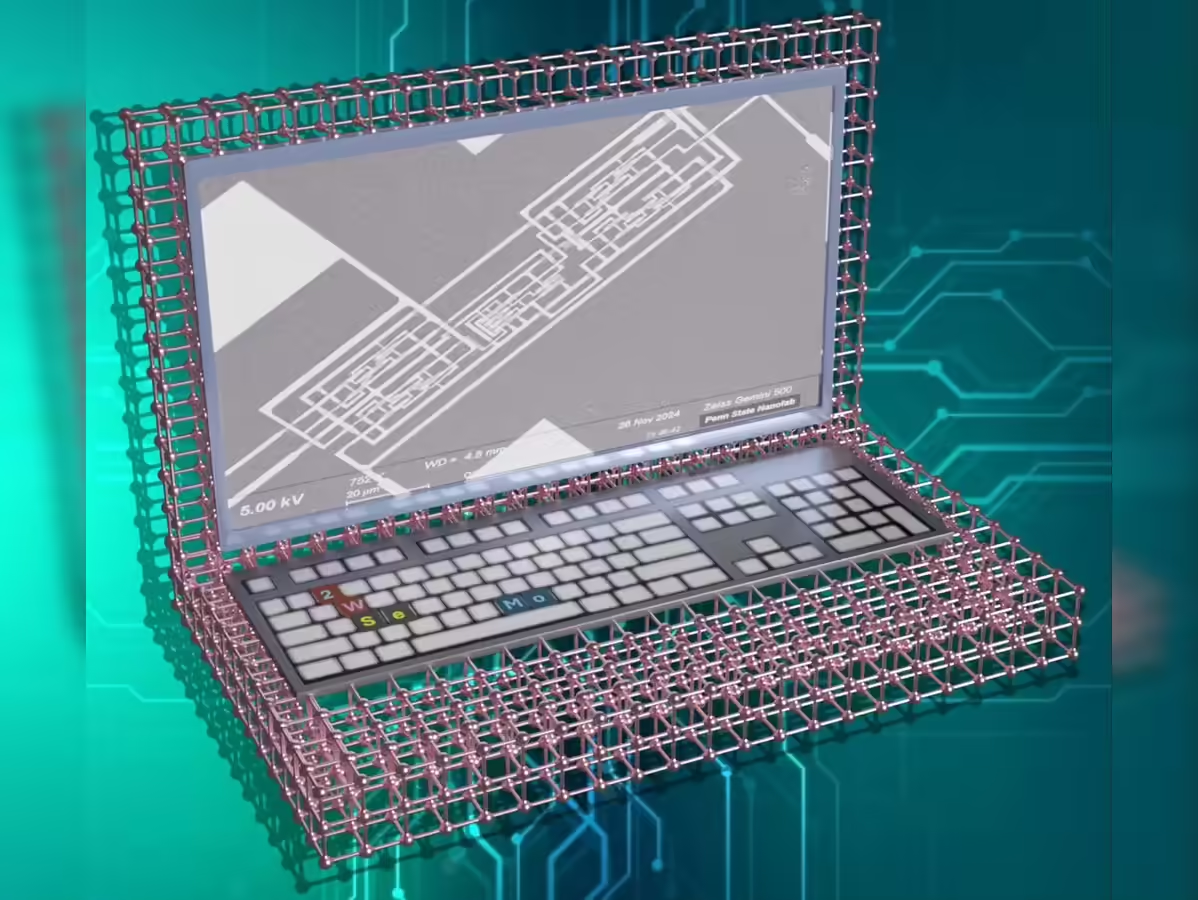
Researchers at The Pennsylvania State University have developed a groundbreaking computer using two-dimensional (2D) materials, such as graphene and molybdenum disulfide. These materials, only a few atoms thick, enable transistors with significantly lower power consumption and higher processing speeds compared to traditional silicon-based systems. The prototype computer, reported on June 15, 2025, achieves a 50% reduction in energy use and a 30% increase in computational efficiency. This advancement could transform industries like artificial intelligence, quantum computing, and wearable electronics. The team is now scaling the technology for commercial applications, with potential integration into 6G networks by 2030.
Limited-time offerGet up to 75% OFFGrab the offer