
Latest Development
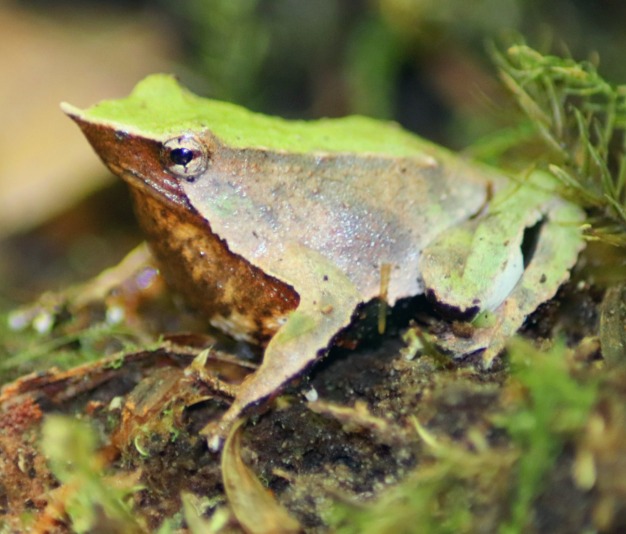
- Chile has initiated a new conservation effort to protect the endangered Darwin’s frog (Rhinoderma darwinii), a rare amphibian species native to Chile and Argentina.
- The step follows growing concerns over habitat degradation, climate change, and the near extinction of its northern cousin.
About Darwin’s Frog:
- Scientific Name: Rhinoderma darwinii
- Common Name: Southern Darwin’s Frog
- Discovery: Identified in 1834 by Charles Darwin during his voyage through the Chiloe Islands of southern Chile.
- Size: Tiny frog measuring around 3 cm (1.18 inches).
- Habitat: Forest streams in humid southern forests of Chile and Argentina, preferring mossy, wooded, and grassy habitats.
Unique Characteristics:
- Mouth-Brooding Behavior
- Male frogs carry developing tadpoles inside their vocal sacs, releasing them only after metamorphosis.
Camouflage:
- Leaf-like skin provides natural camouflage.
- When threatened, it plays dead by lying still on the forest floor or floating.
Activity:
- Diurnal species, active during the day and resting at night.
Diet:
- Feeds on insects and arthropods.
Conservation Status:
- Southern Darwin’s Frog: Listed as Endangered.
- Northern Darwin’s Frog (Rhinoderma rufum): Considered Critically Endangered and possibly extinct, not seen in the wild since the 1980s.
Threats to Survival:
- Due to forest fires, deforestation, and urbanization.
Climate Change:
- Altered rainfall and temperature patterns affect moist forest ecosystems.
Invasive Species:
- Predators and competitors introduced to native habitats.
Disease:
- Fungal infections like chytridiomycosis are devastating amphibian populations globally.
Significance of Conservation Efforts:
- Darwin’s frog is a flagship species representing the health of temperate forests in southern Chile.
- Protecting it involves broader measures to preserve biodiversity, restore native forests, and educate local communities.
- The new program includes habitat monitoring, research funding, captive breeding, and community participation.