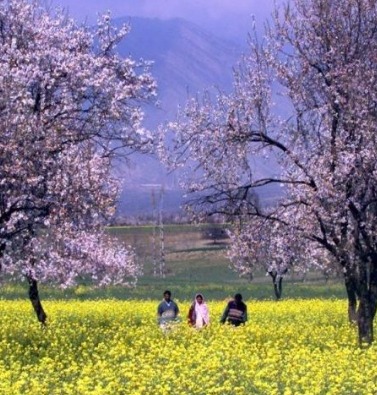
- The almond harvest in Kashmir, an important seasonal and cultural event, has brought relief and joy to farmers this year with a bumper crop being reported.
- Almonds, one of the oldest and most important tree nut crops in the world, hold both economic and cultural value in the region.
- Almond cultivation thrives in colder climates, requiring temperatures between 7°C to 24°C, average rainfall of 75 to 110 cm, and well-drained loamy soils.
- The crop is suitable for altitudes ranging from 750 to 3200 meters above sea level, making the hilly terrains of Jammu & Kashmir, Himachal Pradesh, and Uttarakhand particularly favourable.
- Globally, countries like the USA, Australia, Spain, and Turkey lead in almond production, while in India, Kashmir has been historically known for its almond orchards. Almonds are grown in both sweet and bitter varieties and are widely used in sweets, beverages, food products, and oil extraction.
- Despite this year’s success, farmers continue to face challenges such as erratic weather patterns, competition from cheaper imports, limited access to modern farming techniques, shrinking farmlands, and inadequate policy support.
- Experts suggest that investment in irrigation, cold storage, and market access can further boost the prospects of almond cultivation in India.
Limited-time offerGet up to 75% OFFGrab the offer
Bumper Almond Harvest Brings Cheer to Kashmir Farmers
Seasonal harvest marks cultural significance; favourable climate boosts production
Check your eligibility now